


Key Takeaways
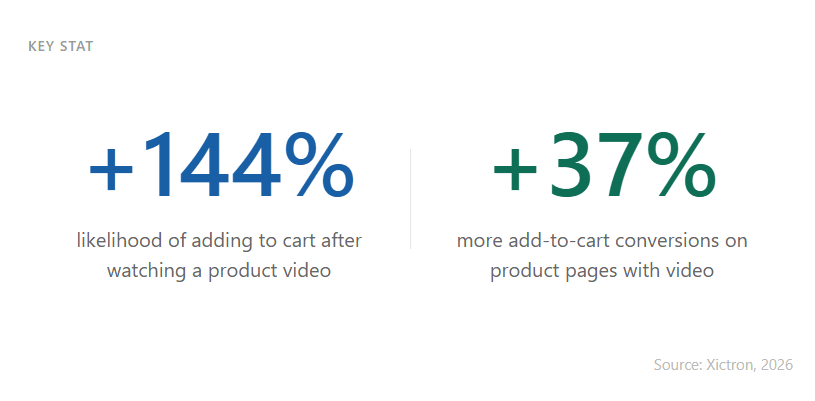
- Product pages with embedded video see 37% more add to cart conversions than pages without video, and the likelihood of adding to cart goes up by 144% after a shopper watches a product video, according to data compiled by Xictron in 2026.
- The best AI video generator for ecommerce keeps your actual product accurate in every frame, since AI tools that warp logos, labels, or packaging will hurt trust instead of building it.
- Watch out for tools that lock you into watermarks, charge per export, or only handle one format like text to video without supporting product image references.
- The most useful AI video tools for ecommerce produce multiple formats from one input, including UGC videos, static ads, carousels, and presenter videos.
- HeyOz combines product extraction, video generation, and direct social publishin
Introduction
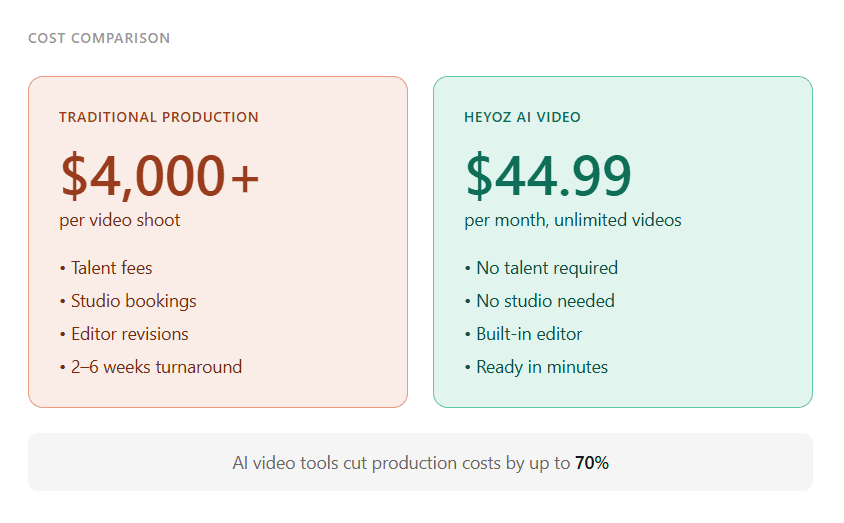
A skincare founder I know spent $4,000 last quarter on a single product video shoot. It took six weeks. Two days after launch, she ran an AI-generated UGC video that cost her $40 to make. It outperformed the studio video on every metric.
That is the conversation happening across DTC and ecommerce right now. Picking the right tool is what separates the founders who win this shift from the ones who waste money on shiny outputs that nobody buys from.
Why an AI Video Generator Is Worth Considering for Ecommerce
Ecommerce conversion rates are not where they used to be. Global e-commerce conversion rates average 1.65% in 2024, with significant variation across industries and top performers achieving 4.7% or higher. The brands hitting those higher numbers are doing one thing differently. They are showing product, not describing it.
Video is the lever. Product pages with video convert up to 80% better on average than pages without video, and the likelihood of adding a product to cart increases by 144% after watching a product video. Static images sell the existence of a product. Video sells how it feels to own it.
The problem until recently was production. Filming, editing, and reshooting cost real money. Creating marketing videos has traditionally been a costly affair requiring pricey studios and professional crews, and AI video generators cut production costs by up to 70%. Now you can produce a month of product videos for less than the price of a single freelance shoot.
There is a catch worth flagging. Not every AI video generator ecommerce brands use is built for ecommerce specifically. Many were built for explainer videos, faceless YouTube, or generic content. That is where most brands get burned on their first try.
What to Look For in an AI Video Generator for Ecommerce
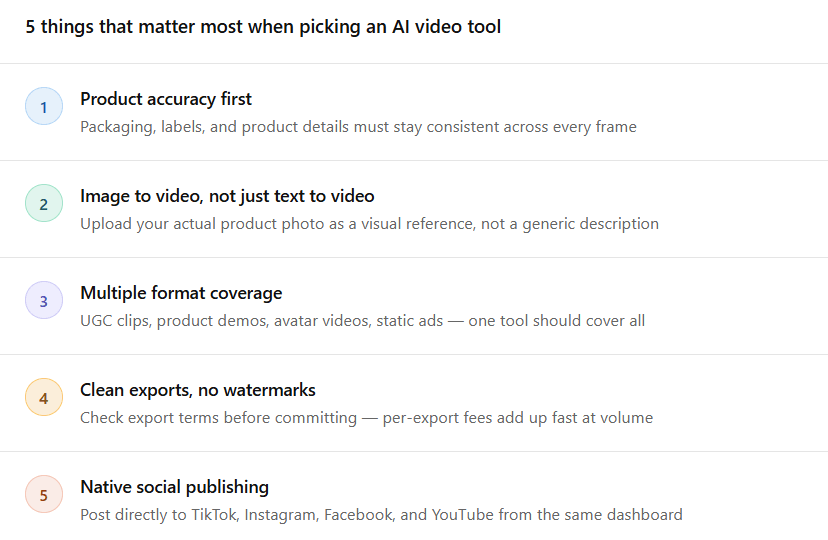
Pick a tool based on what it does for your product, not what its homepage demo looks like. Five things matter more than the rest.
Product accuracy first. The tool needs to keep your packaging, labels, and product details consistent across every frame. An AI-generated product clip may look polished while still creating problems for ecommerce, since a small creative error can become a product accuracy issue, a brand issue, or a customer trust issue. If the logo warps mid-video, the tool is not ready for product work.
Image to video support, not just text to video. Text to video models are fun. They also tend to generate generic stand-in products instead of yours. The best AI video generator for ecommerce lets you upload your actual product image as a visual reference, so the output features your specific product, not a generic version of what you described.
Multiple format coverage. A real ecommerce content stack needs more than one type of video. UGC-style clips for paid social. Product demos for landing pages. Avatar-led videos for explainer content. Static ads for testing creative. A tool that only does one format means you still need three other subscriptions.
Clean exports with no watermarks. Many free tools stamp a logo across every export. That is fine for testing, useless for posting. Check the export terms before you commit. Some tools also charge per export on top of the subscription, which adds up fast when you are testing 20 creative variants.
Native social publishing. Generating the video is half the job. Posting it is the other half. The tools that save the most time let you publish directly to TikTok, Instagram, Facebook, and YouTube from the same dashboard
What to Avoid When Picking an AI Video Tool
Some flags are easy to spot once you know what to look for.
Avoid tools that only support short generic clips. Many models still cap at 3 to 10 seconds. Reddit users warn about a fine line between amazing cinematic clips and AI slop, with quality inconsistency being a common complaint. If you need a full product demo, you will end up stitching short clips together in a separate editor, which defeats the point.
Avoid heavy credit systems with unclear pricing. Some platforms make you buy "credits" that get consumed in ways you cannot predict. One regeneration burns three credits. A 1080p export burns five. Your $30 plan disappears in a weekend. Flat-fee pricing is friendlier for ecommerce teams that need volume.
Avoid tools that cannot extract your product details automatically. If you have to manually upload images, type product descriptions, and pick brand colors every single time you make a video, you will produce maybe two videos a week. The good tools pull all of that from your product URL in under a minute.
Avoid platforms with no editing layer. AI generates the raw clip. You still need to trim, add text overlays, swap a frame, or refine timing. Tools without a built-in editor force you into CapCut or Premiere for every adjustment, which adds 30 minutes to each video.
Be skeptical of "free forever" plans on production-grade tools. Most free tiers cap resolution, add watermarks, or limit you to two videos a month. Free tiers often include watermarks limiting professional use without paid upgrade. Test on a free trial. Switch to paid if it earns its keep.
How to Pick the Right Tool for Your Brand
The right tool depends on what you sell and how you sell it.
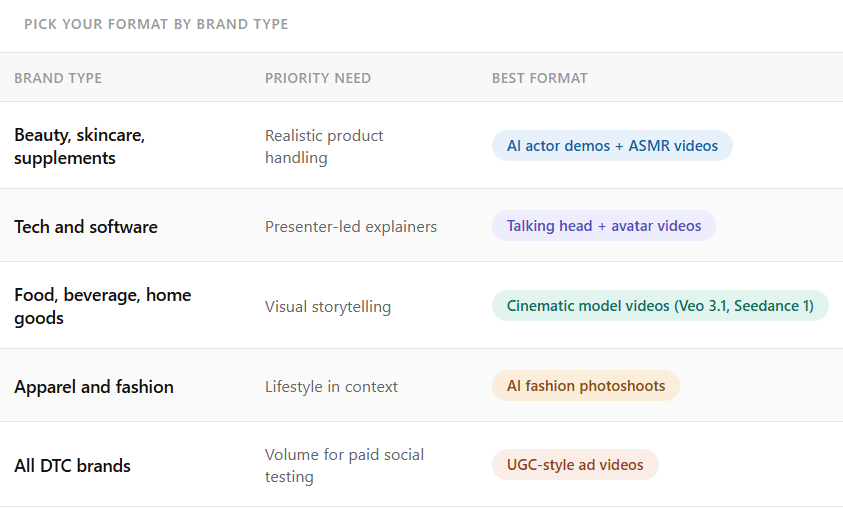
If you run a beauty, skincare, supplement, or apparel brand, your priority is realistic product handling. AI actors holding your product, applying it, or demonstrating it. Look for tools with strong avatar libraries and image to video support so your actual product appears on screen.
If you run a tech or software brand, your priority is presenter-led explainers. Talking head videos with clean audio, accurate lip sync, and customizable AI avatars. Look for tools with deep voice libraries and script generators.
If you run a food, beverage, or home goods brand, your priority is visual storytelling. Cinematic product shots, ASMR-style handling, lifestyle scenes. Look for tools that support multiple advanced video models like Veo 3.1, Sora 2, Kling 2, and Seedance 1, since model quality directly affects how natural your final footage looks.
A few examples of AI in ecommerce worth borrowing. Unilever uses AI video tools for faster marketing campaign roll-outs, while Deloitte used AI video translators to dispense compliance training in 40 countries, achieving an 80% cut in localization costs. The brands using AI video at scale are not replacing their entire content team. They are replacing the parts that used to take weeks, so the team can spend time on strategy instead of production.
Why HeyOz Works for Ecommerce Brands
HeyOz was built specifically for ecommerce, which is why it ticks every box on the list above without making you build a custom workflow.
Here is the exact flow:
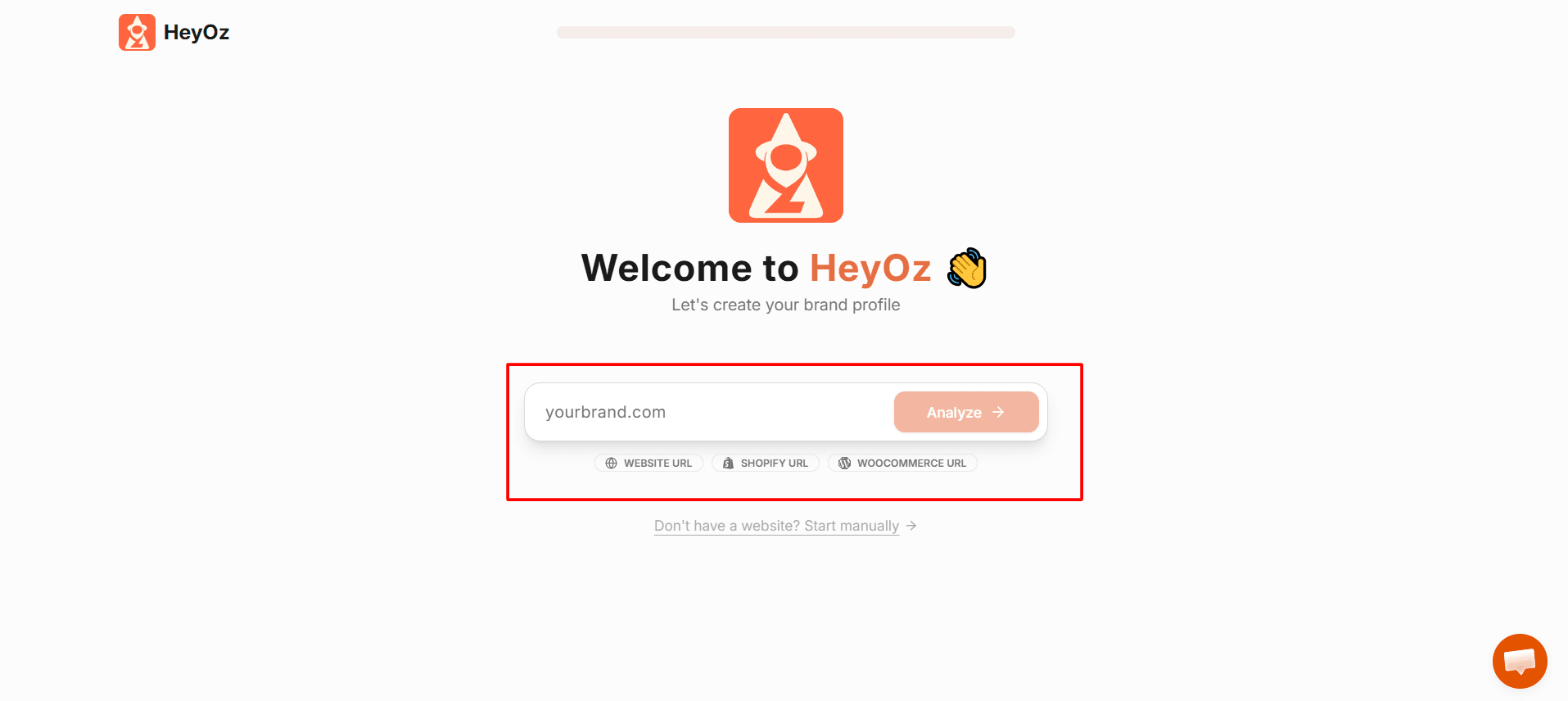
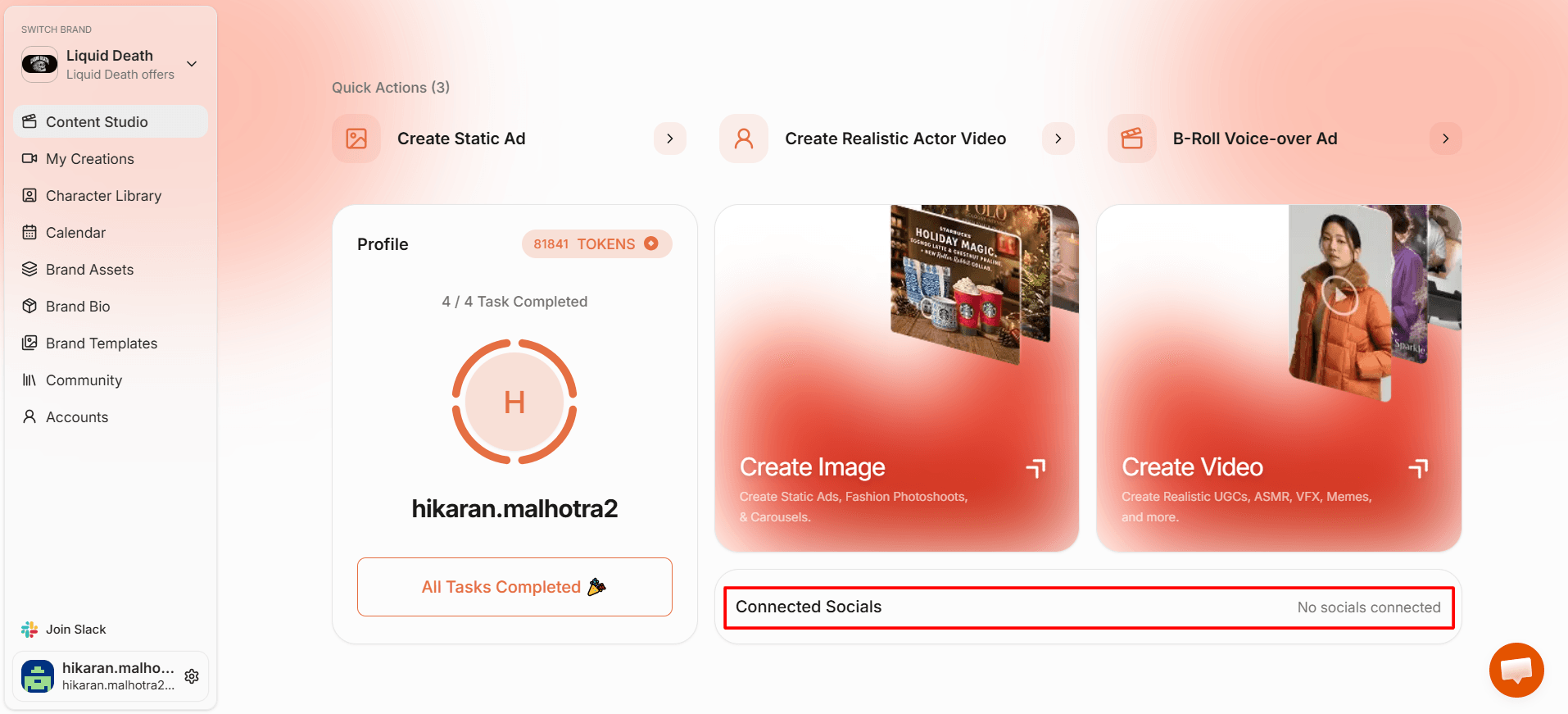
Paste your product URL. HeyOz extracts your product images, descriptions, brand colors, and audience details automatically. No manual setup.
Open the Content Studio and pick a format. Static ads, AI UGC videos, talking avatar clips, fashion photoshoots, product in hand visuals, B-roll voiceover ads, ASMR videos, billboard scenes, or carousels.
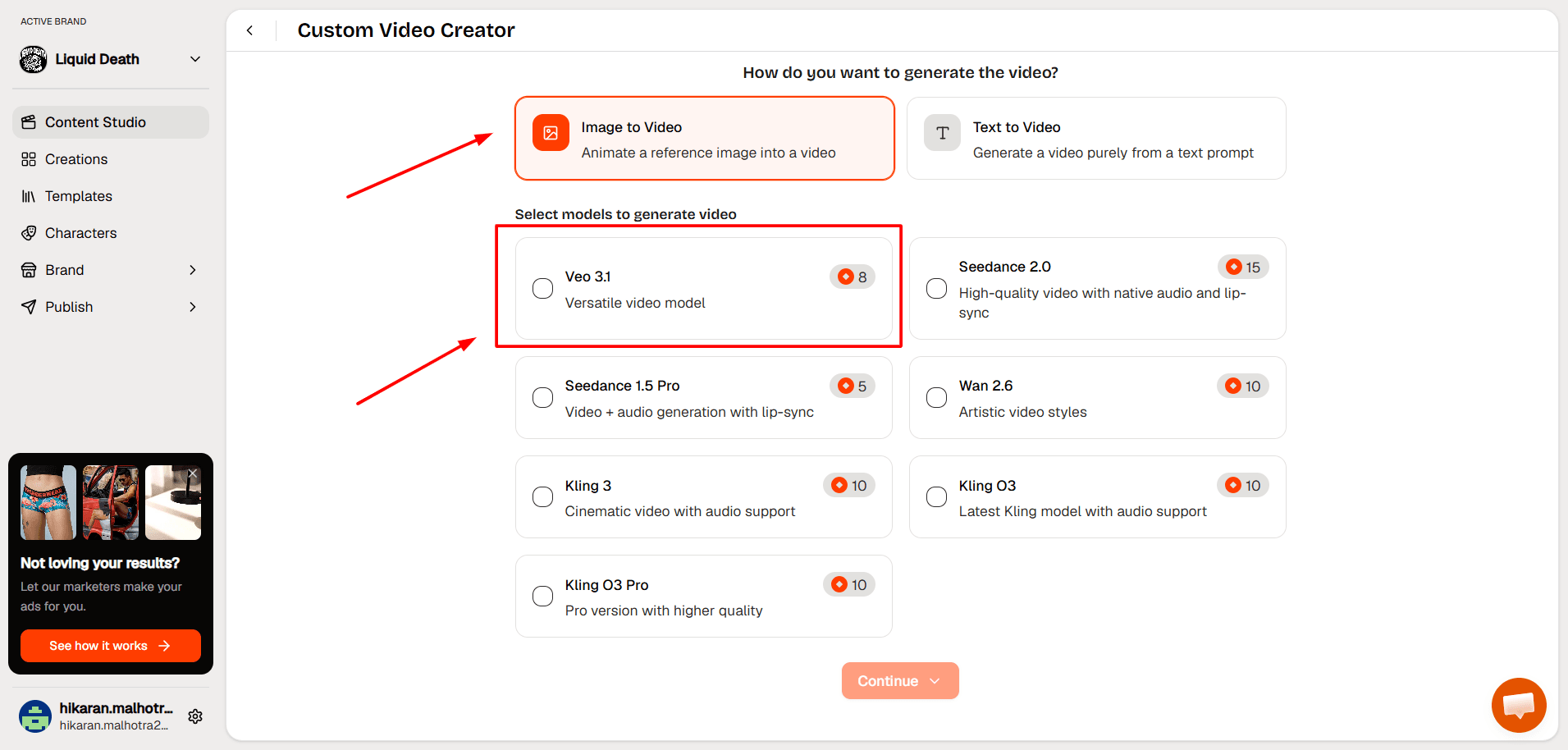
Choose your AI model. Veo 3.1, Sora 2, Kling 2, Seedance 1, and Wan 2.5 are all built in, so you pick the right one for the look you need.
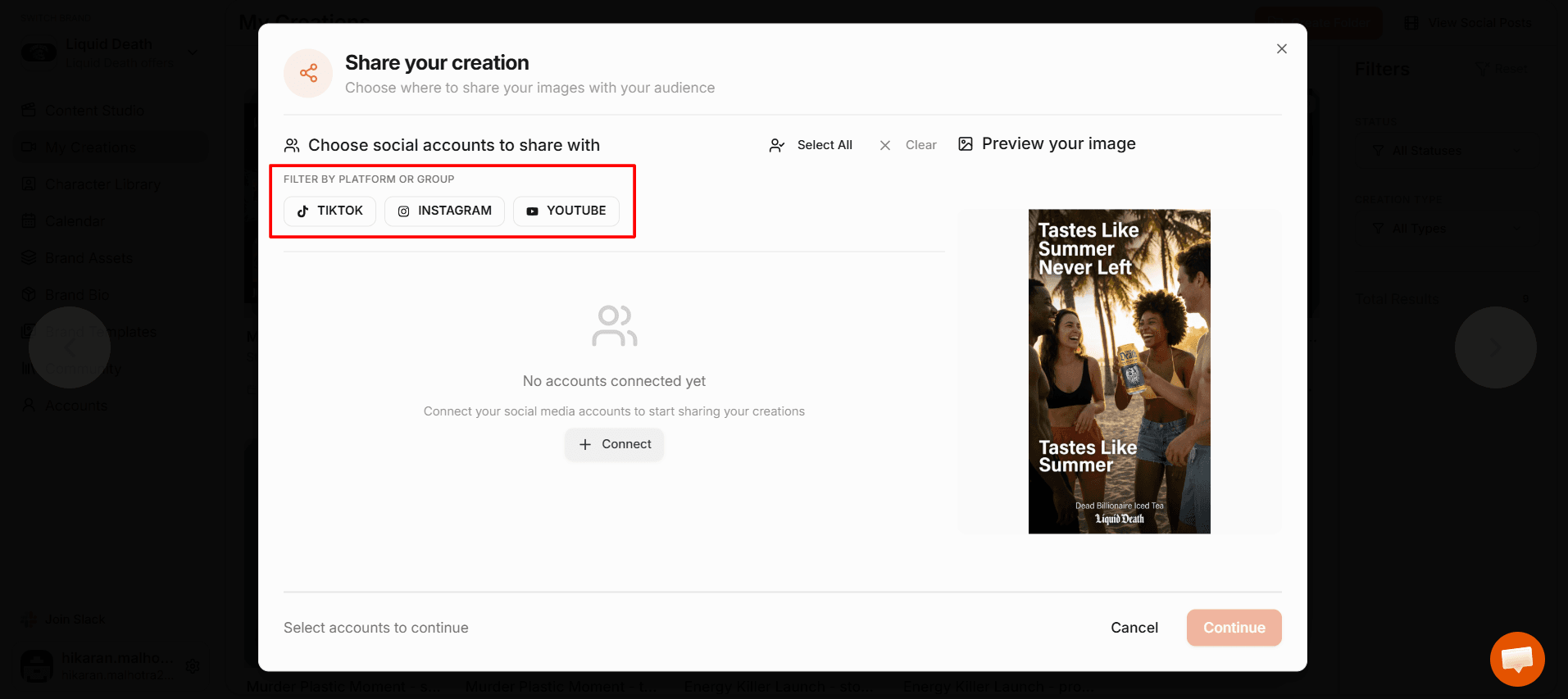
Generate, edit inside the built-in editor, and download or schedule directly to TikTok, Instagram, YouTube, and Facebook.
Why Ecommerce Founders Pick HeyOz
- Product accuracy stays locked across every frame, since your uploaded product image anchors every scene.
- Clean watermark-free exports on every plan, including the free trial.
- One subscription replaces a video generator, an avatar tool, a scheduler, and an editor. Plans start at $44.99 a month.
- Direct publishing to TikTok, Instagram, YouTube, and Facebook removes the need for a separate scheduling tool like Later or Buffer.
- AI actors can hold and demonstrate your actual product on camera, which most generic tools cannot do.
Try a free trial at HeyOz.com and produce your first product video this afternoon.
FAQs
What is the best AI video generator for ecommerce in 2026?
The best AI video generator for ecommerce is one that covers UGC videos, static ads, product demos, and presenter videos in one tool. HeyOz fits that profile and is built specifically for product brands, while general-purpose tools like Runway and Sora 2 are stronger for cinematic concept work than for direct product marketing.
Can AI video generators handle my actual product, not a fake version of it?
Yes, the better ones can. Look for tools that support image to video, which means you upload your real product photo and the AI uses it as the visual base for the generated clip. Tools that only support text to video will often generate a generic product instead of yours.
How much does an AI video generator for ecommerce cost?
Most production-grade tools fall between $30 and $100 per month for basic plans. HeyOz starts at $44.99 a month for full access including video generation, editing, and social publishing. Free trials are common, but watch for hidden export fees and per-credit pricing that adds up fast.
Will my customers know the videos are AI-generated?
Most will not, as long as your product is rendered accurately and the motion looks natural. The bigger risk is using a tool that produces awkward AI faces, warped products, or flat audio. Pick a tool with strong avatar realism and high-fidelity models, and the AI origin becomes invisible to the average shopper.
About the author
Ahad Shams
Ahad Shams is the Founder of HeyOz, an all-in-one ads and content platform built for founders and small teams. He has worked across consumer goods and technology, with experience spanning Fortune 100 companies such as Reckitt Benckiser and Apple. Ahad is a third-time founder; his previous ventures include a WebXR game engine and Moemate, a consumer AI startup that scaled to over 6 million users. HeyOz was born from firsthand experience scaling consumer products and the need for a unified, execution-focused marketing platform.