

Key Takeaways
- Median hook rate is now 33% on TikTok and 28% on Meta. Top 10% performers hit 55% on TikTok and 45% on Meta (Benly analysis of 12,000+ ads in 2026).
- UGC style hooks outperform polished ads by 31% on hook rate and 33% on CTR. Authentic openers win, polished commercial openers lose.
- The first 3 seconds decide whether your ad has a shot at converting. If you do not pass the hook threshold, none of the rest matters.
- The most reliable hook patterns in 2026 are offer first, pattern interrupt, problem call out, social proof drop, and 30 second benefit stack. They show up in 19%, 14%, and other top brackets of all hand tagged DTC ads.
- AI tools like HeyOz now let brands generate 20 plus hook variations in a single afternoon for $44.99 a month, replacing weeks of agency turnaround.
Introduction
A DTC brand I follow ran 12 AI ad hooks on TikTok last week. Three flopped. Eight broke even. One drove a 4.8x ROAS on cold traffic. That hit rate (roughly 1 in 12) is what winning hook testing actually looks like in 2026. The brands holding their numbers are the ones shipping enough hooks for that one to show up.
Why Hooks Decide Whether Your Ad Even Has a Chance
A hook is the first 2 to 3 seconds of your ad. It is what stops the scroll, signals relevance, and tells the algorithm whether your creative deserves the next 30 seconds of the viewer's attention.
This is not a soft point. TikTok and Meta now grade ad performance heavily on what they call hook rate, the percentage of impressions that reach the 3 second mark. Sovran's 2026 analysis found that hook rate is the single biggest predictor of CTR and downstream ROAS across both platforms (Source: Sovran video ad benchmarks).
A weak hook is not a soft loss. It is an algorithmic penalty. Ads with low hook rates pay higher CPMs and reach smaller audiences. Strong hooks lower your CPM and unlock cheaper auctions. The difference between a 20% and a 40% hook rate often shows up as a 25% to 40% gap in cost per acquisition once the campaign exits learning.
That is the entire reason AI ad hooks on TikTok and Meta have become the most studied lever in performance marketing this year.
The Hook Rate Benchmarks That Actually Matter on TikTok and Meta
If you do not know what good looks like, you do not know if your hooks are broken or fine.
Here are the current 2026 benchmarks from Benly's analysis of 12,000+ ads across both platforms (Source: Benly creative benchmarks):
- Meta median hook rate: 28%. Top 10% performers: 45%.
- TikTok median hook rate: 33%. Top 10% performers: 55%.
- YouTube median hook rate: 22%. Top 10% performers: 38%.
UGC style ads outperform polished ads by 31% on hook rate and 33% on CTR.
A few things worth noticing in this data.
TikTok runs 5 to 10 points hotter than Meta on the same creative. Native sound, faster scroll speed, and a younger audience push hook rates up. If you reshare a Meta winner directly to TikTok, you should expect higher hook rates and higher drop off at 15 seconds. The platforms reward different things.
Vertical beats horizontal. Letterboxed 16:9 padded into a vertical surface loses 5 to 12 hook rate points versus native 9:16 (Source: Coinis hook rate data via Meta and TikTok benchmarks).
Sound on lifts hook rate measurably. Meta's auction now favors sound designed Reels creative. Silent ads still serve but at lower hook rate and higher CPM.
If your hook rate is sitting under 25% on either platform, your opener is the bo
The 7 Hook Types That Are Winning Right Now
BrandMov's analysis of 4,994 hand tagged DTC ads on Meta surfaced the patterns that show up most often in winning creative. Here are the seven worth testing first (Source: BrandMov DTC hook analysis).
1. Offer first openers
19% of all winning hand tagged DTC ads start with an explicit price, discount, bundle, or limited time framing in the first 1 to 2 seconds. No story, no setup. The offer is the hook. Works best when your category is mature and the buyer already knows what your product does.
2. 30-second benefit stack
14% share. A concrete time bound promise such as "In 30 seconds I am going to show you why this protein hits different." Works in education heavy categories where buyers need a reason to believe before a reason to buy.
3. Pattern interrupt
Anything that breaks the visual or emotional rhythm of the feed. Dead silence where music is expected. A single bold word filling the screen. Two seconds of direct eye contact before speaking. Pattern interrupts amplify every other hook type stacked on top of them (Source: GetHookd analysis of 65M+ Meta ads).
4. Problem call out
"If you wake up with back pain every morning, this is for you." Calls out a specific person experiencing a specific problem. Works hardest in wellness, supplements, and any category where the buyer is already aware of the pain point.
5. Curiosity gap
Promises a reveal that requires watching to access. "We found the ad format Meta's algorithm quietly favors in 2026" is a textbook curiosity gap hook. The brain is wired to seek closure on open loops, which is why scrolling past feels like leaving a story unfinished.
6. Confessional or direct address
Person speaks straight to camera as if telling a friend. "I tried every protein powder for six months. Here is the one I actually finished the tub on." Performs especially well for cold traffic on TikTok where audiences distrust polished commercial production.
7. Before and after
Visual transformation hook. Works in any category where the change is visible or quantifiable. Skincare, fitness, home cleaning, organization. Watch out for unrealistic claims that trigger ad disapprovals.
Test 3 to 5 meaningfully different hook types per ad set. Not 5 copy edits of the same idea. The brands holding their ROAS in 2026 are running structurally different hooks in parallel, not minor variations.
How to Generate AI Ad Hooks at Volume Without Burning Out
Here is where most brands hit the wall. They know they need to test 20 hook variations a month. They cannot produce 20 hook variations a month with their current team.
A creator filmed UGC hook costs between $75 and $3,000 per video and takes 5 to 10 days to deliver (Source: 2026 UGC market data via Billo). An agency turn is 2 to 4 weeks. Even an in house video editor takes 3 to 7 days per asset.
If your creative fatigue window is 14 to 21 days, you do not have 3 to 7 days per asset to spare.
AI generated ad hooks compress this entire production cycle. The script generation takes minutes. The voice and actor selection takes minutes. The video render takes minutes. What used to be a 10 day production sprint becomes an afternoon.
This is why AI ad hooks on TikTok and Meta have become the default production model for performance brands in 2026. It is not because the AI quality is better than a real creator (in some formats it is, in others it still is not). It is because the production speed makes high volume hook testing actually possible for the first time.
The brands winning are running 20 to 50 new hook variations a month. Most of them are AI generated.
Ship AI Ad Hooks at Volume With HeyOz
HeyOz was built specifically for this. You script a hook, generate the visual, and post, all from the same dashboard. No designer, no shoot day, no agency turn.
1. Add your product. Paste your product page URL or upload your product image. HeyOz reads the page and pulls in your product details, brand colors, and assets automatically. Open the Content Studio.
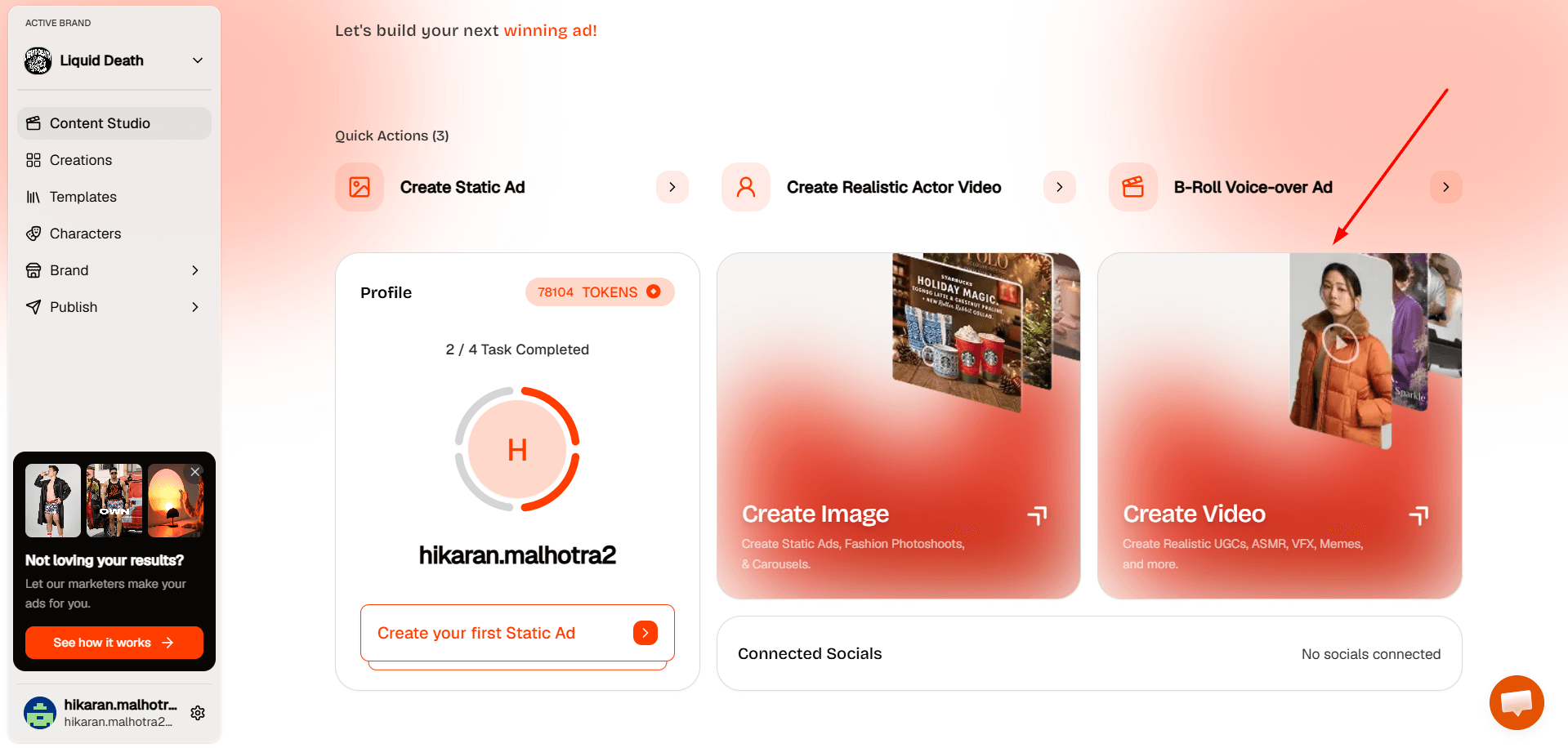
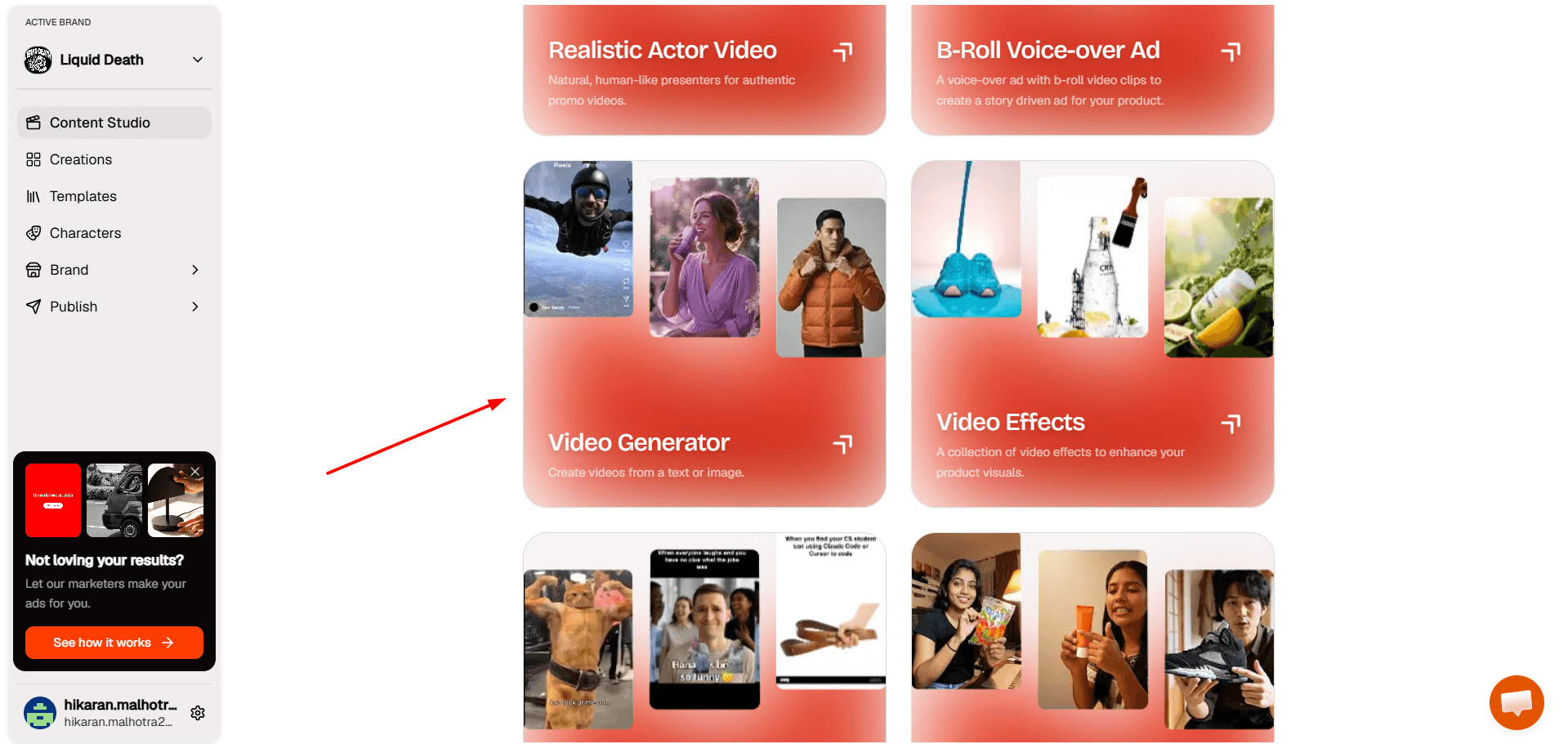
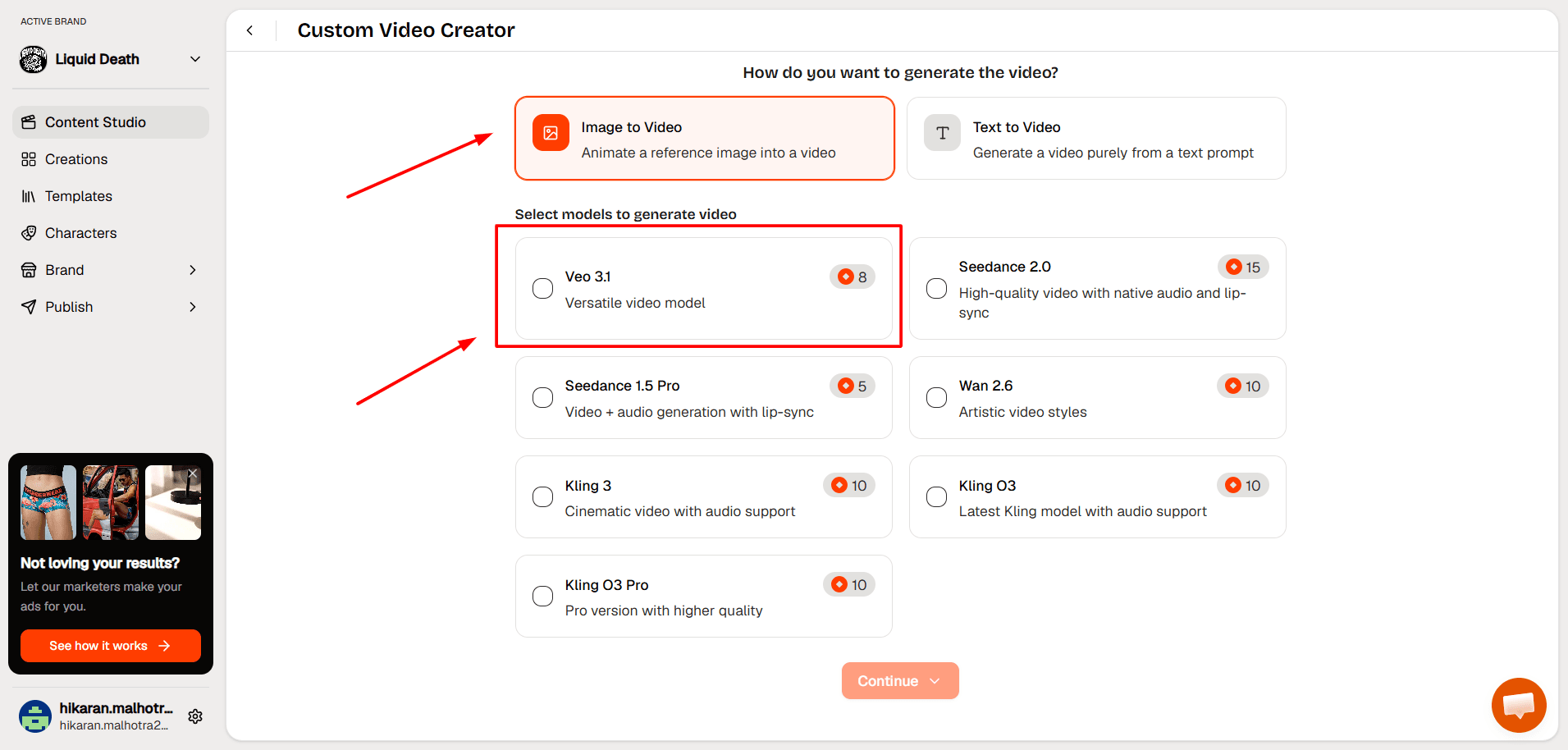
2. Select the Video Generator format and pick any format (Veo 3.1) from the available models.
3. Upload your image. Choose a product image from your Brand Assets or upload a new one. Veo 3.1 uses this as the visual reference for the scene.
4. Write your scene description. Describe the subject, the lighting, the motion, and the camera angle. Set format and generate.
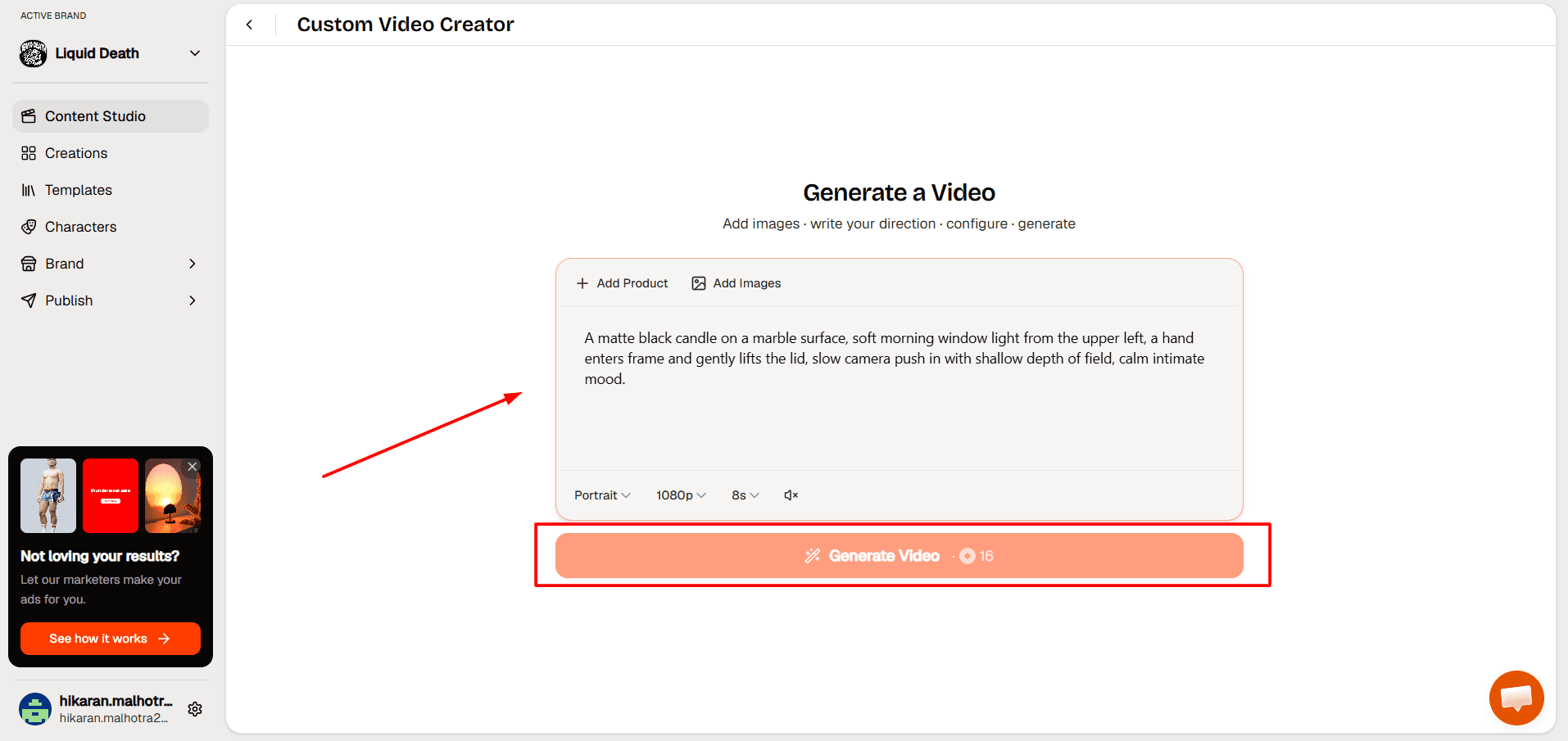
Why performance brands use HeyOz for hook production:
- Ship 20 to 50 hook variations a month without a designer, agency, or UGC shoot.
- Test confessional, pattern interrupt, problem call out, and curiosity gap hooks in the same afternoon.
- Match your brand colors, product details, and tone automatically across every variation.
- Run AI actors holding and demonstrating your actual product on camera, the format outperforming polished ads by 31% on hook rate.
- Replace your entire creative production stack starting at $44.99 a month.
Start your free trial at HeyOz.com.
FAQs
What is a hook rate and why does it matter on TikTok and Meta?
Hook rate is the percentage of impressions that watch your video for at least 3 seconds. It is the single biggest predictor of CTR and ROAS across both platforms in 2026. A 40% hook rate ad will almost always outperform a 20% hook rate ad on the same audience, even if the second one has better copy in seconds 5 through 30.
How long should an ad hook actually be?
The hook itself is the first 2 to 3 seconds. The window where you have to land it is even tighter than that. By the 3 second mark, the algorithm has already classified your ad as a winner or a loser based on watch time, so everything you say or show in those opening frames decides whether the rest of your ad gets a chance.
Can AI generated hooks really compete with founder or creator filmed hooks?
Yes, with the right format match. AI actor demos, AI UGC videos, and AI generated product visuals are performing at comparable hook rates to creator filmed UGC in 2026, at a fraction of the cost and production time. The quality bar moved in the last 12 months. Polished commercial style AI does still underperform, which is why most winning AI hooks now mimic creator style rather than studio style.
How many hook variations should I test per campaign?
3 to 5 structurally different hooks per ad set as a starting point. Most brands holding their numbers run 20 to 50 new hook variations a month at the account level. Volume is what surfaces the outliers. Five carefully crafted hooks will not beat 30 fast hooks across the same time window.
About the author
Ahad Shams
Ahad Shams is the Founder of HeyOz, an all-in-one ads and content platform built for founders and small teams. He has worked across consumer goods and technology, with experience spanning Fortune 100 companies such as Reckitt Benckiser and Apple. Ahad is a third-time founder; his previous ventures include a WebXR game engine and Moemate, a consumer AI startup that scaled to over 6 million users. HeyOz was born from firsthand experience scaling consumer products and the need for a unified, execution-focused marketing platform.