

Key Takeaways
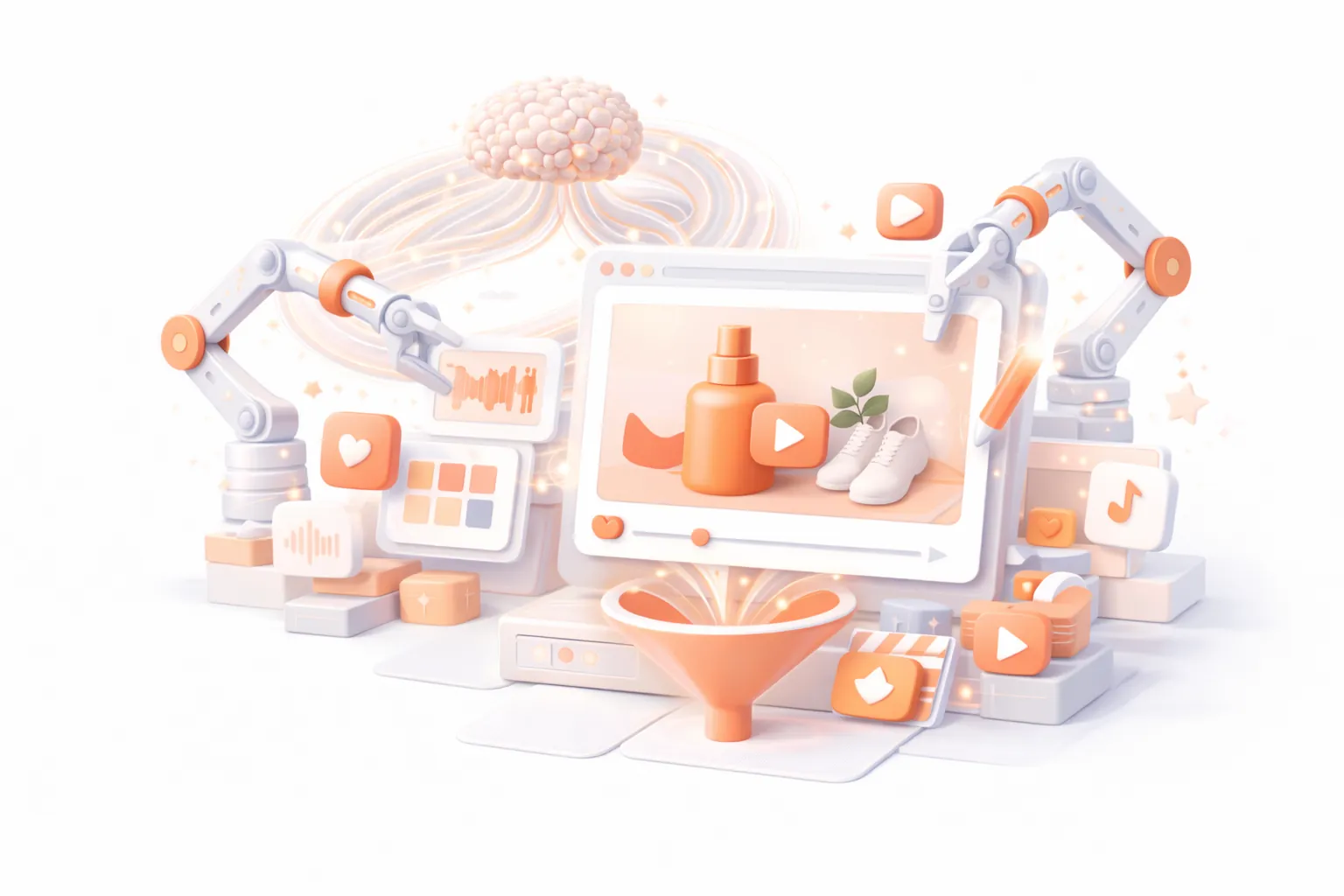
- AI video ad generators automate the entire ad creation process, from scripting to final export
- Multiple AI systems work together to generate scripts, visuals, voices, captions, and layouts
- These tools are built for advertising use cases, not traditional filmmaking
- Brands can create and test high volumes of ad creatives without filming or editing
- AI video ad generators are optimized for social platforms like TikTok, Instagram, Facebook, and YouTube
Introduction
Video advertising has traditionally been one of the most resource-intensive parts of marketing. Creating even a single video ad usually involves scripting, filming, editing, reviewing, and exporting in multiple formats. This process can take days or weeks, requires specialized skills, and often limits how many creatives a team can test at once.
AI video ad generators were created to solve this exact problem. Instead of relying on cameras, actors, editors, and manual timelines, these systems use artificial intelligence to automate the creation of advertising videos. A user provides basic inputs such as text, product information, or images, and the platform generates a complete video ad that is ready to run on social media.
What makes these tools different from traditional video software is not just automation, but intent. AI video ad generators are designed specifically for marketing. They focus on speed, variation, testing, and platform optimization rather than cinematic quality or long-form storytelling.
This article explains how AI video ad generators actually work behind the scenes, what components are involved, what inputs they require, and why they have become a distinct category within marketing technology.
What is an AI video ad generator
An AI video ad generator is software that automatically creates advertising videos using artificial intelligence. It transforms text, product data, and images into short-form video ads without manual editing.
Unlike general-purpose video editors, AI video ad generators are purpose-built for advertising. They prioritize:
- Fast production
- Repeatable templates
- High creative volume
- Platform-specific formatting
- Easy variation testing
From a functional perspective, an AI video ad generator replaces multiple roles at once. It acts as a scriptwriter, video editor, motion designer, voice actor, and formatter, all within a single automated workflow.
At its core, an AI video ad generator answers one simple question:
How can a brand turn product information into testable ad creatives as quickly as possible?
How do AI video ad generators create videos
AI video ad generators rely on a pipeline of specialized AI systems that work together. Rather than using one single model, they combine multiple models, each responsible for a specific part of the video creation process.
Step 1: Input interpretation
The process begins with input analysis. The system examines whatever information the user provides, which may include:
- A product or landing page
- Product images
- A short text prompt
- A script or bullet points
- Brand tone or style preferences
The AI extracts meaning from these inputs, identifying the product, its benefits, and the intended message.
Step 2: Script and narrative generation
Once the input is understood, a language model generates a short script or narrative structure. For ads, this usually follows familiar performance patterns:
- A hook in the first few seconds
- A problem or pain point
- A product introduction
- One or two key benefits
- A call to action
The system keeps scripts concise and optimized for short attention spans, which is essential for platforms like TikTok and Instagram.
Step 3: Visual planning and asset selection
After the script is generated, the system decides how the visuals should support the message. This may include:
- Selecting product images or lifestyle visuals
- Choosing background scenes
- Deciding where text overlays appear
- Adding motion effects or transitions
For avatar-based ads, this step also includes selecting a digital presenter and framing the shot appropriately.
Step 4: Voice and audio generation
Next, the AI generates audio elements. This typically involves:
- Creating a voiceover that matches the script
- Adjusting pacing and tone
- Synchronizing voice delivery with visual timing
Captions are often generated at the same time to ensure readability during silent autoplay, which is common on social feeds.
Step 5: Assembly and formatting
All elements are then assembled into a complete video. The system ensures:
- Proper timing between scenes
- Correct placement of text and visuals
- Consistent styling across frames
Finally, the video is exported in formats optimized for specific platforms, such as vertical videos for TikTok or square formats for Instagram feeds.
What inputs are needed to generate an AI video ad
One of the biggest advantages of AI video ad generators is how little input they require compared to traditional production.
Common inputs include:
- A product link or landing page
- Two to five product images
- A short description or prompt
- Optional brand or tone preferences
In many cases, a user can generate a complete video ad using just a URL or a short paragraph of text.
What is not required is equally important:
- No cameras
- No filming locations
- No actors
- No microphones
- No editing timelines
This dramatically lowers the barrier to video advertising, especially for small teams and growing brands.
What types of ads can AI video generators produce
AI video ad generators are designed to support a wide range of ad formats commonly used in performance marketing.
Typical outputs include:
- testimonial ads
- Product demonstration videos
- or avatar ads
- Meme and green-screen ads
- Short-form vertical videos
These formats are intentionally aligned with what performs well on social platforms, rather than traditional broadcast-style commercials.
How AI video ad generation differs from manual video editing
AI video ad generation is fundamentally different from manual editing workflows.
Speed
Manual editing requires assembling footage, trimming clips, adding text, and exporting multiple versions. AI can generate a complete ad in minutes.
Cost
Traditional production involves equipment, talent, and skilled labor. AI reduces these costs by replacing most of the production pipeline with software.
Scalability
Manual workflows struggle to scale. AI allows teams to create dozens of variations from one concept.
Testing
A/B testing is built into AI workflows. Hooks, visuals, and CTAs can be swapped automatically.
Workflow simplicity
There are no timelines, layers, or keyframes. The user focuses on ideas, not execution.
Because of these differences, AI video ad generators are not just faster editors. They represent a completely different approach to ad creation.
Why AI video ad generators exist as a separate category
AI video ad generators exist because advertising has unique requirements that traditional video tools were never designed to meet.
Advertising demands:
- Rapid iteration
- High creative volume
- Platform-specific formats
- Consistent testing
- Predictable structures
General-purpose video editors prioritize flexibility and creative control. AI ad generators prioritize repeatability, speed, and performance.
This is why the two categories coexist rather than replacing each other.
How Heyoz creates AI video ads for brands
Platforms like Heyoz apply AI video ad generation across multiple ad formats in one system.
Step 1: Choose an AI actor video ad format
Select an AI actor or video ad format to create a talking-head or presenter-style video.
📸 Screenshot: Video / AI actor format selection screen
Step 2: Add your script or prompt
Provide a script or short prompt describing what the AI actor should say and how the ad should feel.
📸 Screenshot: Script or prompt input + actor preview
Step 3: Generate and review the video ad
Generate the video and review the output. You can regenerate variations, make edits, or export the final video for use in ads.
📸 Screenshot: AI actor video preview screen
Heyoz is an end-to-end ad creation workflow designed specifically for performance marketing.
Conclusion
AI video ad generators work by combining multiple AI systems into one automated workflow. They analyze inputs, generate scripts, plan visuals, create audio, assemble scenes, and export platform-ready ads without manual editing or filming.
These tools are designed specifically for advertising, not filmmaking. Their value lies in speed, scalability, and the ability to test creative ideas at volume. As digital advertising continues to favor rapid experimentation and short-form content, AI video ad generators have become an essential part of modern marketing stacks.
Frequently Asked Questions
1. How do AI video ad generators work
They use AI models to convert text, images, and product data into fully produced video ads automatically.
2. Do AI video ads require filming or actors
No. Videos are generated using digital visuals, AI voices, and avatars instead of cameras and human actors.
3. What do I need to create an AI video ad
Typically a product link, images, or a short text description.
4. Are AI video ads suitable for paid advertising
Yes. They are designed specifically for social and performance marketing platforms.
5. Which tools can generate AI video ads
Platforms like Heyoz offer AI-powered workflows for creating UGC videos, avatar ads, product demos, and multi-format creatives.
About the author

Ahad Shams
Ahad Shams is the Founder of HeyOz, an all-in-one ads and content platform built for founders and small teams. He has worked across consumer goods and technology, with experience spanning Fortune 100 companies such as Reckitt Benckiser and Apple. Ahad is a third-time founder; his previous ventures include a WebXR game engine and Moemate, a consumer AI startup that scaled to over 6 million users. HeyOz was born from firsthand experience scaling consumer products and the need for a unified, execution-focused marketing platform.