

Key Takeaways
- Creative quality now drives 56% of ad performance variation on Meta, more than audience targeting (22%) or ad placement (12%) combined. Your creativity is the campaign.
- Meta's Andromeda algorithm update in 2025 shifted the primary optimization variable away from demographic targeting and toward creative quality and diversity. Brands that test more creatives win.
- An AI static ad generator for Facebook produces platform-ready ad creatives from a product image or URL in minutes, no design experience required.
- The 4:5 portrait format is the default for Facebook and Instagram feed ads. It takes up more screen space than square and outperforms it in most placements.
- HeyOz generates multiple static ad variations from your product in minutes, exports them in the right sizes for Meta, and lets you publish without leaving the platform.
Introduction
A DTC brand spent $650 on a designer to produce three static ad creatives. Two weeks later the ads went live. One performed. The other two never ran again. That is the normal way most brands handle static ad production. AI changes that math entirely. You can generate ten variations in the time it used to take to brief a freelancer. This guide shows you how.
Why Static Ads Still Outperform Video on Facebook and Instagram
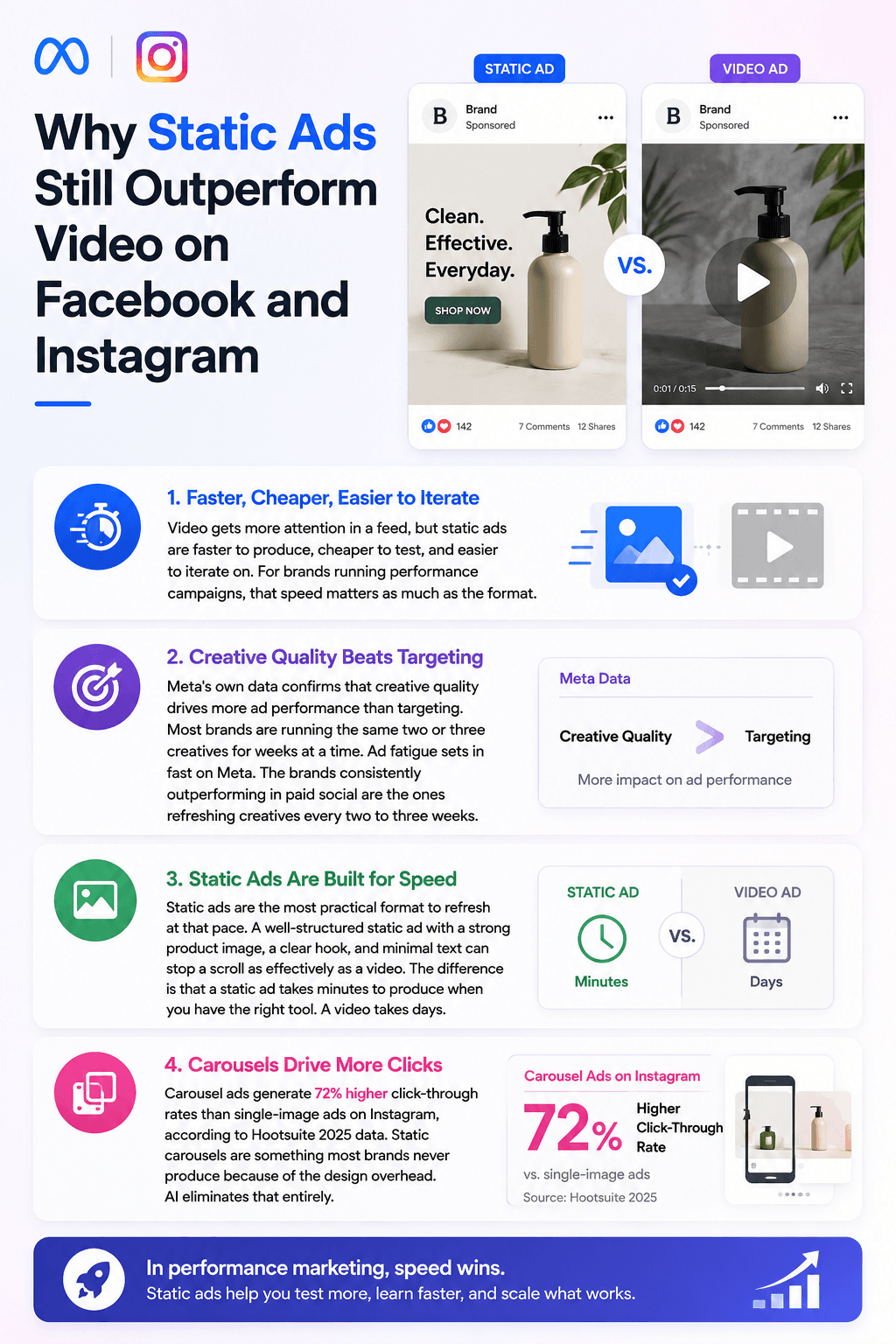
Video gets more attention in a feed, but static ads are faster to produce, cheaper to test, and easier to iterate on. For brands running performance campaigns, that speed matters as much as the format.
Meta's own data confirms that creative quality drives more ad performance than targeting. Most brands are running the same two or three creatives for weeks at a time. Ad fatigue sets in fast on Meta. The brands consistently outperforming in paid social are the ones refreshing creatives every two to three weeks.
Static ads are the most practical format to refresh at that pace. A well-structured static ad with a strong product image, a clear hook, and minimal text can stop a scroll as effectively as a video. The difference is that a static ad takes minutes to produce when you have the right tool. A video takes days.
Carousel ads generate 72% higher click-through rates than single-image ads on Instagram, according to Hootsuite 2025 data. Static carousels are something most brands never produce because of the design overhead. AI eliminates that entirely.
What Makes a Static Ad Actually Convert on Meta
Most static ads fail not because of the format but because of how they are built. A few structural decisions separate the ones that stop the scroll from the ones that get skipped.
One focal point per ad
A busy background or multiple competing elements splits the viewer's attention. A single focal point, the product, the face, the offer, converts better. The viewer's eye needs to land somewhere immediately and know what to do with what they are seeing.
Text that works above the fold
Meta truncates primary text after 125 characters in most placements. The hook has to land before the read more cut-off. Keep the primary text under 125 characters and put the most important information first.
The 4:5 portrait format as the default
A 4:5 portrait image takes up more screen space in the feed than a square 1:1 image. More screen space means more attention. It should be the default format for every Facebook and Instagram feed placement unless you have a specific reason to use square.
Contrast that works on mobile
Most Meta ads are viewed on a phone, often in bright light. Low contrast between the product and the background, or between text and the image, kills visibility. High contrast between the product and the background is one of the most reliable ways to improve performance with no other changes.
How to Use an AI Static Ad Generator for Facebook Step-by-Step
The process with a good AI static ad generator is straightforward. Most of the creative decisions happen inside the tool rather than requiring you to have design skills.
- Upload your product image or paste your product URL. A good AI ad generator reads your product page and pulls the product name, description, images, and brand colors automatically.
- Select or upload a template. Most platforms offer templates organized by format and use case: feed ads, story ads, carousel ads. Pick one that matches the campaign goal.
- Add any specific instructions. Tell the AI to adjust the layout, copy tone, or product focus. A short instruction like 'make it relevant to skincare' or 'emphasize the discount' changes the output meaningfully.
- Choose the number of variations. Generate five to ten variations at once. Testing multiple hooks and layouts is how you find the one that performs. Do not launch a single creative and wait.
- Review in the image editor and export. Make any final adjustments to colors, text, or layout. Download the ad in platform-ready sizes or post directly.
The whole process takes five to ten minutes per batch. That is ten ad variations ready to test in the time it used to take to send a single brief to a freelancer.
How to Create Static Ads With HeyOz
HeyOz has a dedicated Static Ads format inside its Content Studio. You upload your product, pick a template, and the AI generates multiple ad variations ready for Facebook, Instagram, TikTok, and LinkedIn.
Here is how it works:
1. Open the Content Studio and select Static Ads from the available formats.
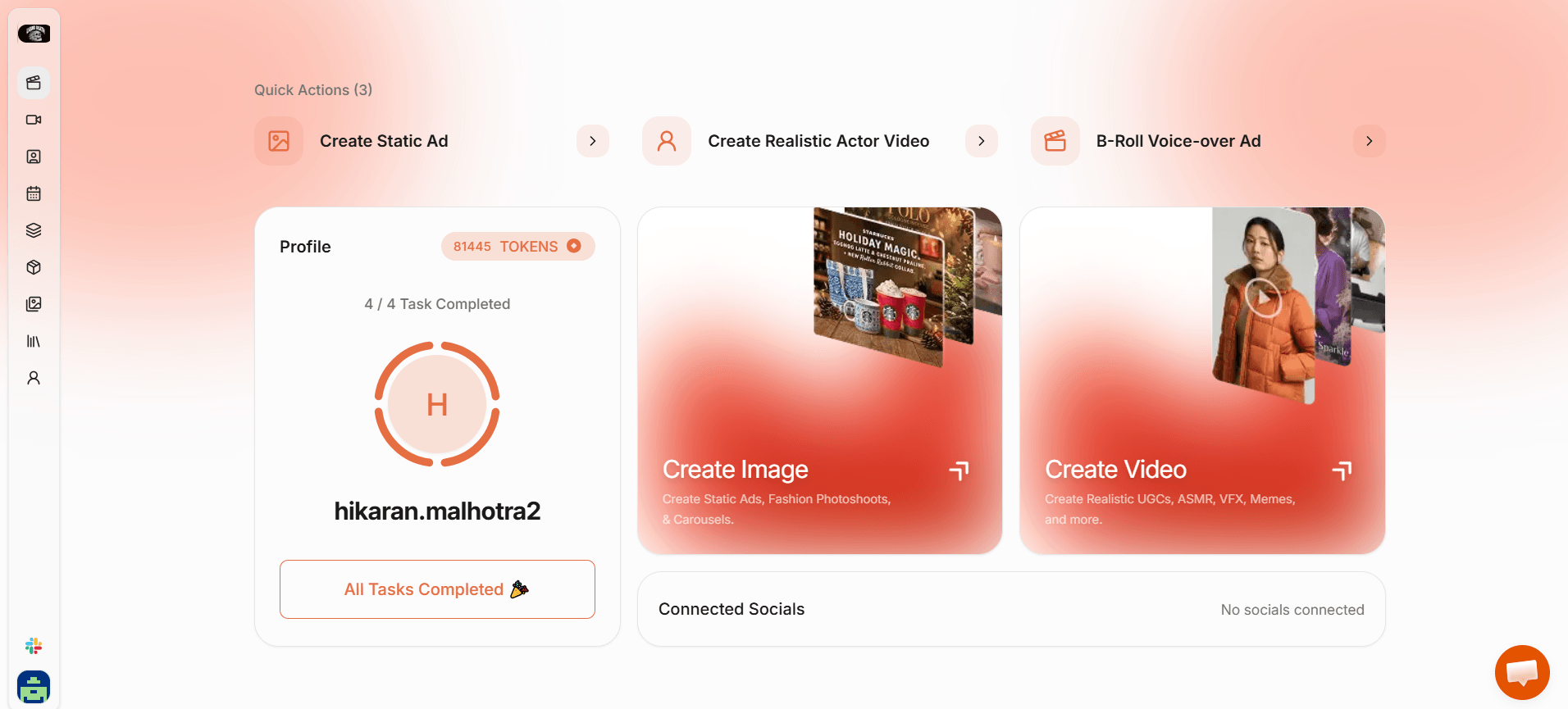
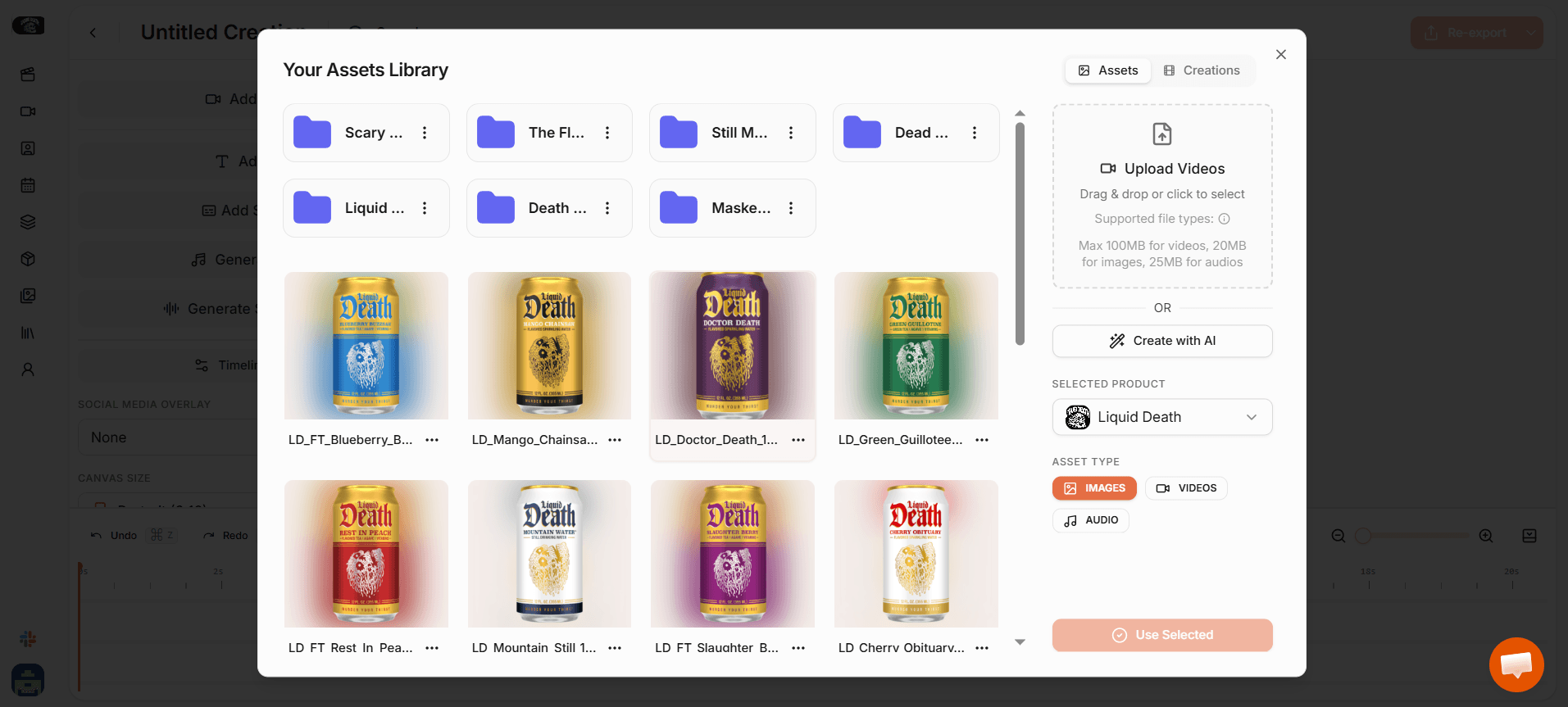
2. Upload your product image or select one from your Brand Assets. HeyOz stores images scraped from your product page during onboarding.
3. Add any specific instructions to guide the AI. Example: 'Make it relevant to my skincare serum' or 'emphasize the 30-day guarantee'.
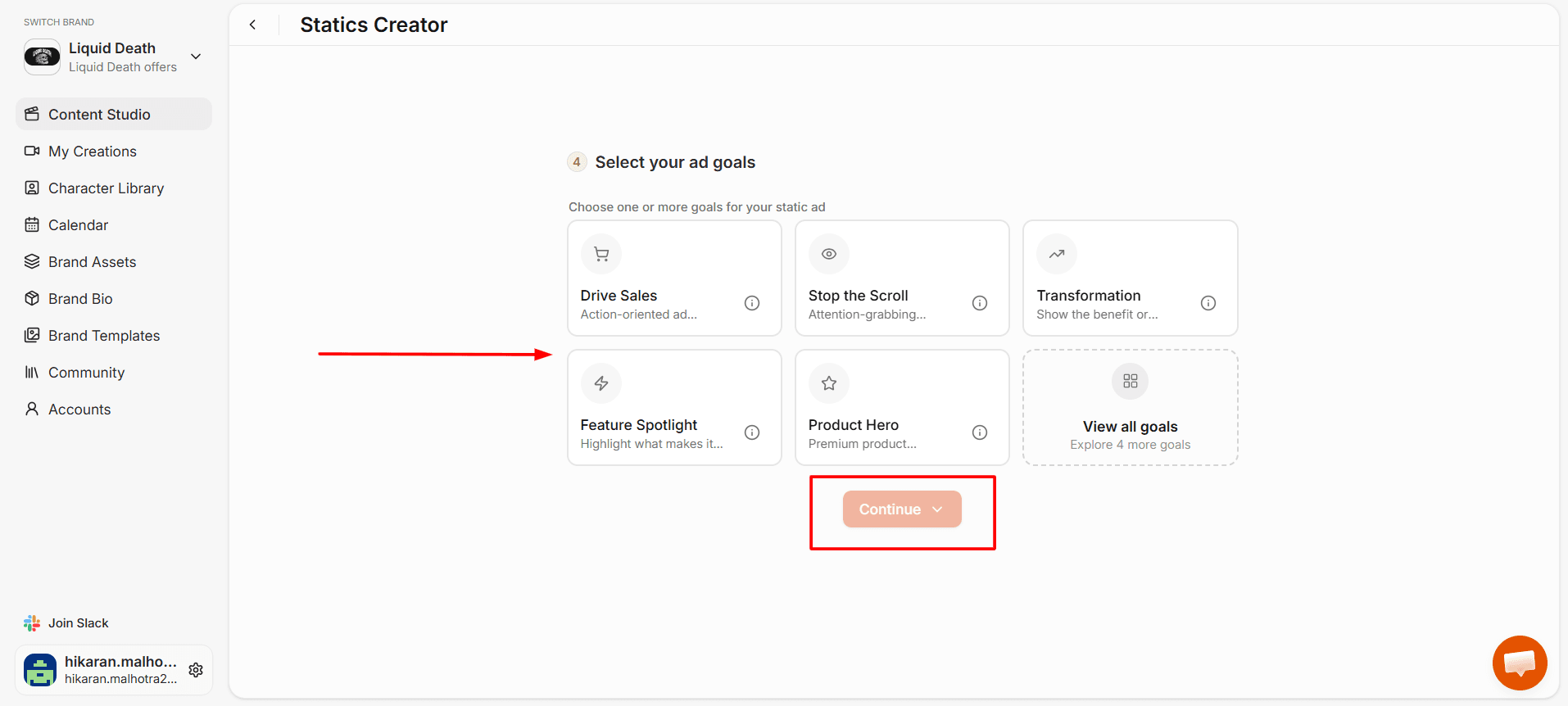
4. Select the number of variations (up to 10).
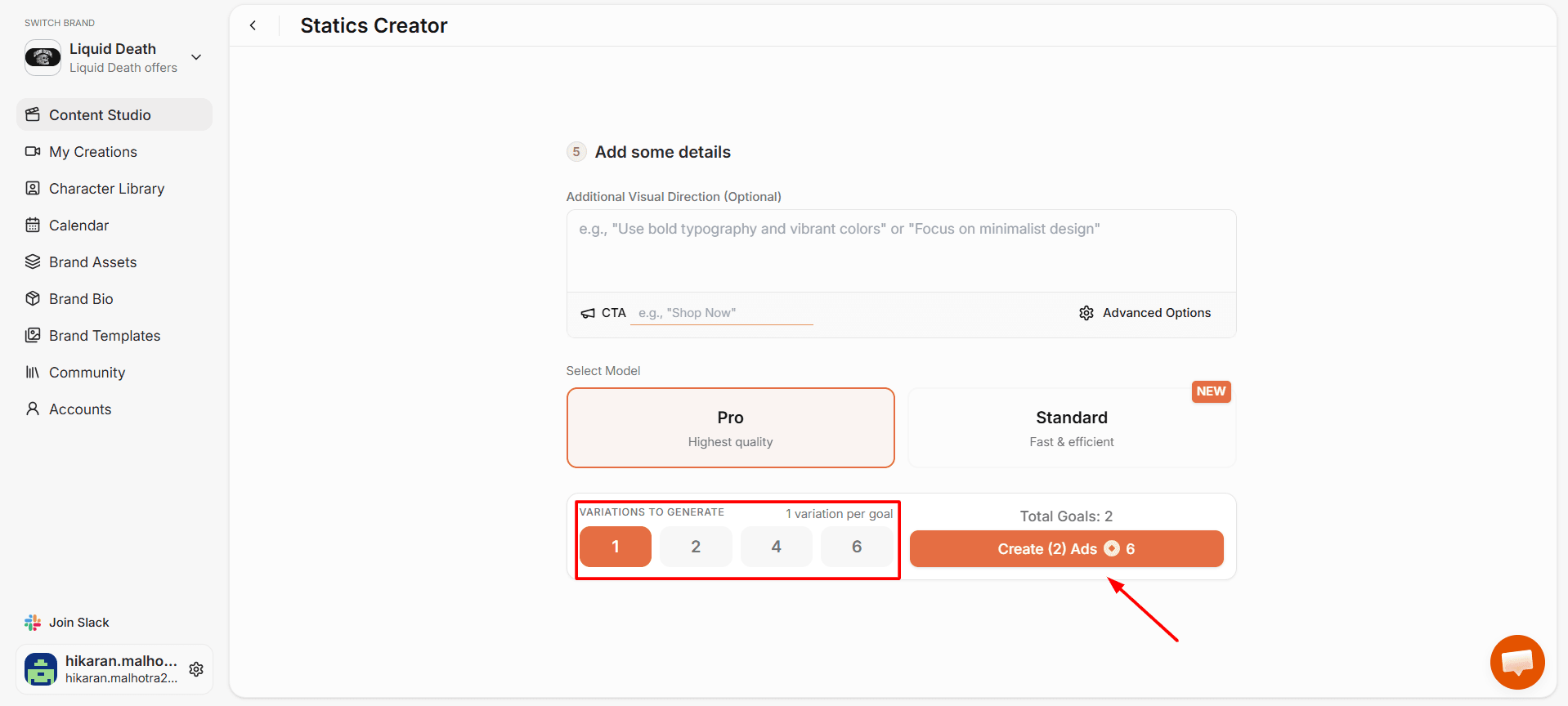
5. Hit Generate, review in the image editor.
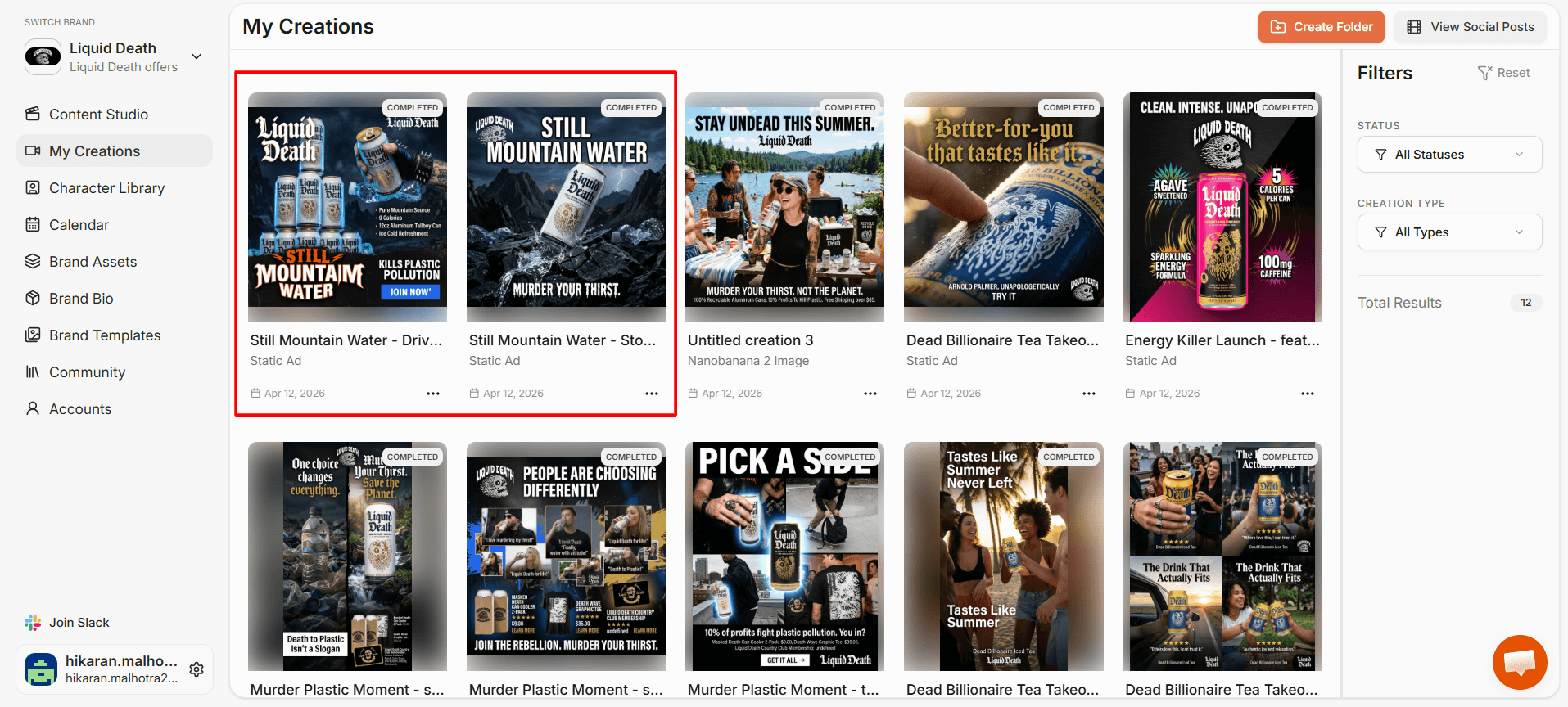
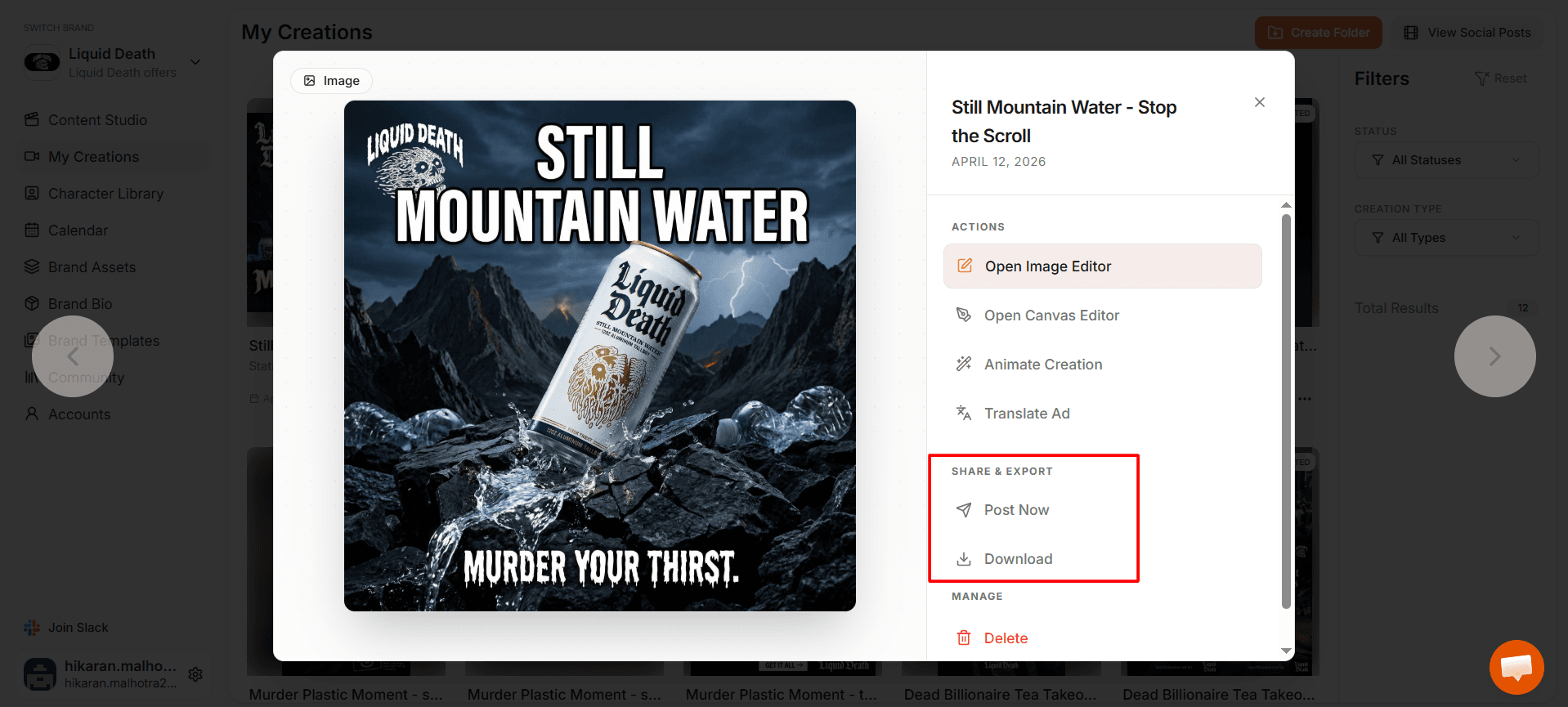
6. Download or publish directly to your connected social accounts.
Why brands use HeyOz for static ad production:
- Generates up to 10 unique ad variations per batch, ready to A/B test across placements
- Exports in platform-ready sizes for Facebook feed, Instagram Stories, LinkedIn, TikTok, and Pinterest
- Built-in image editor for final color, text, and layout adjustments before download
- Brand Assets library stores your product images, logos, and colors for fast reuse across campaigns
- Full content studio, video formats, carousels, and scheduling all in one place from $44.99 a month
How Many Static Ad Variations You Should Actually Test
Most brands test too few creatives and draw conclusions too early. The Meta algorithm needs sufficient data to determine which creative performs best against a given audience. Running one or two variations does not give the system enough signal.
A practical starting point is five variations per product per campaign. Vary the hook text, the background, and the product angle across the five. Keep the offer and the CTA consistent so you are testing the creative, not the offer.
Ad fatigue on Meta typically sets in within two to three weeks for a running creative. The brands consistently generating fresh variations on that cycle are the ones keeping their cost per click stable as campaigns scale. AI makes that refresh rate achievable without a design team.
Average CPM on Meta increased 12% year over year in 2025. Every dollar spent on a tired creative that stopped converting is competing against an auction that got more expensive. Fresh creative is not optional at that scale.
FAQs
Do AI-generated static ads actually perform as well as designer-made ones?
Performance depends on the creative quality, not the tool used to make it. Brands running AI-generated creatives with strong hooks, clear product shots, and proper format sizes consistently match or beat manually designed ads because they test more variations and refresh faster. Volume of testing is the real advantage.
What image size should I use for Facebook and Instagram feed ads?
The 4:5 portrait format (1080 x 1350 pixels) is the default for Facebook and Instagram feed ads. It takes up more screen space than square and tends to outperform it in most placements. For Stories and Reels, use 9:16 vertical (1080 x 1920 pixels). HeyOz exports in all of these formats automatically.
How often should I refresh my Facebook static ad creatives?
Every two to three weeks is a reliable refresh cadence for active campaigns. Watch for rising cost per click and falling click-through rate as signals that a creative has fatigued. AI tools make a two-week refresh feasible without a design bottleneck.
Can I create carousel ads with an AI static ad generator?
Yes. HeyOz has a dedicated Carousel format inside its Content Studio that generates multi-slide carousels from your product assets. Each slide is generated individually and can be edited before download. Carousel ads generate 72% higher click-through rates than single-image ads on Instagram, making them worth producing regularly.
About the author
Ahad Shams
Ahad Shams is the Founder of HeyOz, an all-in-one ads and content platform built for founders and small teams. He has worked across consumer goods and technology, with experience spanning Fortune 100 companies such as Reckitt Benckiser and Apple. Ahad is a third-time founder; his previous ventures include a WebXR game engine and Moemate, a consumer AI startup that scaled to over 6 million users. HeyOz was born from firsthand experience scaling consumer products and the need for a unified, execution-focused marketing platform.