Thirty seconds in a single pass, with stereo sound generated alongside the picture. Kling 4.0 holds a character, a set and a camera move across a full take, so a complete spot comes out as one continuous piece of film rather than three clips stitched together.
Long single takes, character-led scenes and product films made with Kling 4.0 on HeyOz. Thirty seconds, with the sound already in them.
Turn a written idea into a finished cut with Kling 4.0 in three steps.
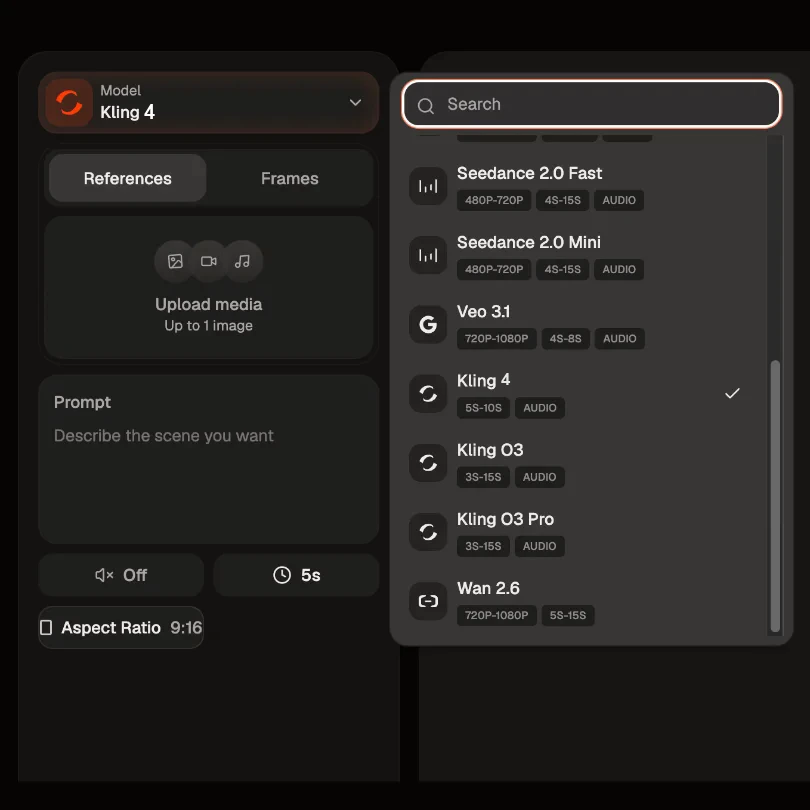
Open the video generator and choose Kling 4 from the model list. Add a product photo or a reference image if you want the shot anchored to something real.
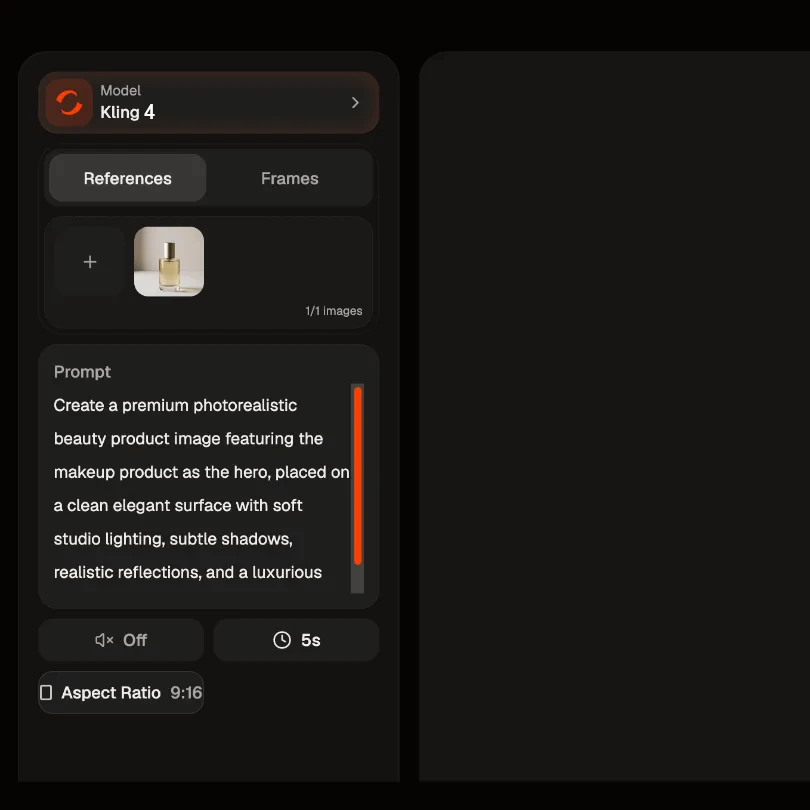
Describe the scene, the camera and the sound in plain sentences. Long briefs help here — you have room for blocking, lensing and grade notes in a single prompt.
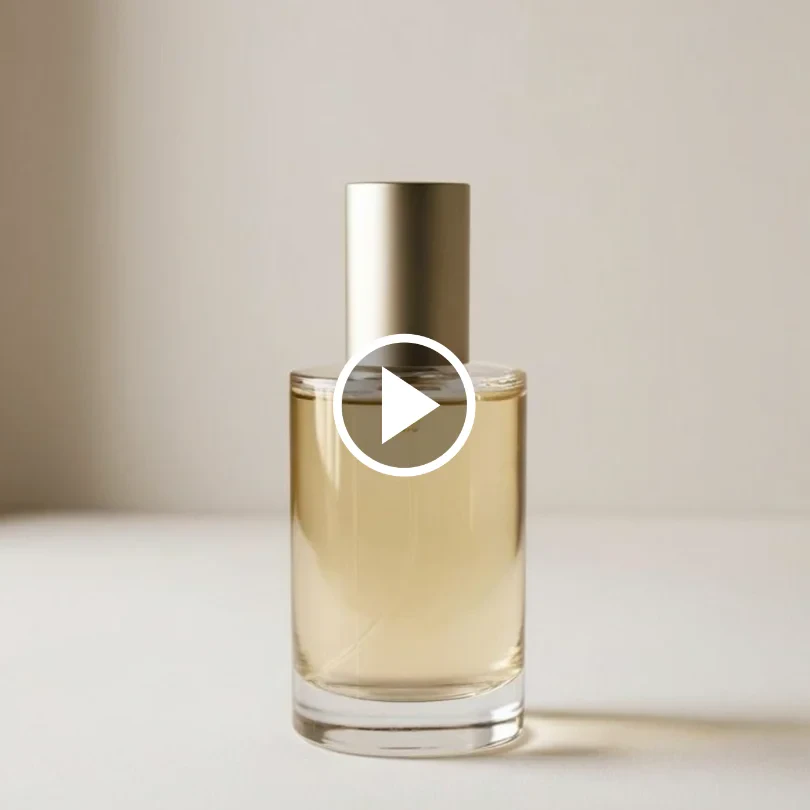
Set your length, ratio and resolution, then generate. If one beat lands wrong, change that part of the brief rather than rerolling the whole take.
Kuaishou's current flagship, released in October 2026. The jump from 3.0 is length, reference control and sound.
Kling 4.0 generates up to thirty seconds natively, in a single pass. That is long enough for a hook, a demonstration and a payoff held together as one continuous shot, instead of three short clips that never quite match on light or motion.
Two-channel stereo is generated with the picture, not bolted on after, so the sound and the frame agree. Lip sync is noticeably tighter than 3.0, across English, Spanish, Japanese, Korean, German, French and more.
Hand it up to fifteen reference assets in one generation — as many as ten images, five video clips, a voice reference and up to seven subjects — then steer the shot with up to ten keyframes. That is how a face, a product and a palette survive a thirty-second take.
Cinematic 21:9, standard 16:9, square and vertical, at 720p or 1080p. Prompts run to 8,000 tokens, so a shot list with blocking, lensing and grade notes fits in one brief.
The prompt-driven route through Kling 4.0 — for when you know the film in your head and have no footage to hand.
A person to camera, saying the line you wrote, with the lip sync holding for the length of the take. Thirty seconds is a whole pitch rather than a fragment.
Motivated light, a real camera move and a grade that holds across the shot. The kind of film that used to need a crew and a colourist before anyone saw a cut.
Illustrated and animated looks hold their style across a full take, so a character stays on model from the first frame to the last instead of drifting halfway through.
Large-scale movement and complex camera work are where 4.0 pulled ahead. Fast motion stays coherent instead of smearing, which is what makes action usable in an ad.
Kling 4.0 is Kuaishou's current flagship video model, launched on 15 October 2026. It generates up to thirty seconds of video and stereo audio together in a single pass, takes up to fifteen reference assets, and runs text to video, image to video and reference to video.
Up to thirty seconds in one generation, which is double what Kling 3.0 managed. Kuaishou has said longer extensions are coming, but thirty seconds in a single pass is what ships today.
Yes. Two-channel stereo is decided together with the picture in the same generation, so effects and dialogue line up with the frame. Lip sync covers English, Spanish, Japanese, Korean, Portuguese, German, French and more.
It is how you hold things steady across a take. One generation accepts up to fifteen reference assets — as many as ten images, five video clips totalling thirty seconds, a voice reference and up to seven subjects — so your product, your presenter and your palette come back as yours.
720p and 1080p, in 21:9, 16:9, 1:1, 9:16 or auto. The cinematic 21:9 ratio is new in 4.0.
Length, references and sound. 3.0 ran three to fifteen seconds with multi-shot storyboarding; 4.0 doubles the take to thirty seconds, adds Omni Reference with up to fifteen assets and ten keyframes, upgrades audio to stereo, and handles large-scale motion more steadily.
Kling 4.0 is built for long, cinematic, motion-heavy takes. If you need a presenter from a single photo, HeyGen is quicker; if you want the fastest turnaround on a batch, a lighter model will get you there sooner.
Yes. Add a product photo as a reference and Kling 4.0 carries the real item through the take, with its actual finish and proportions rather than an approximation.
Pick the right engine for the job — all in one place.
Anyone can give you Kling Video 4.0. Only HeyOz turns it into your ad.
HeyOz reads your brand and keeps every asset on-color, on-voice, on-message.
Seedance, Veo, Kling, GPT Image, and more — no juggling subscriptions.
Sized and formatted for Meta and TikTok, straight out of the box.
Not just a model — templates, avatars, and an agent that does it all.
Start Now. No agency, no brief, no blank screen.


