

The Brand DNA workflow — GPT-6 Astra + GPT-Image-2.5
You commented "dna." Here's the whole thing.
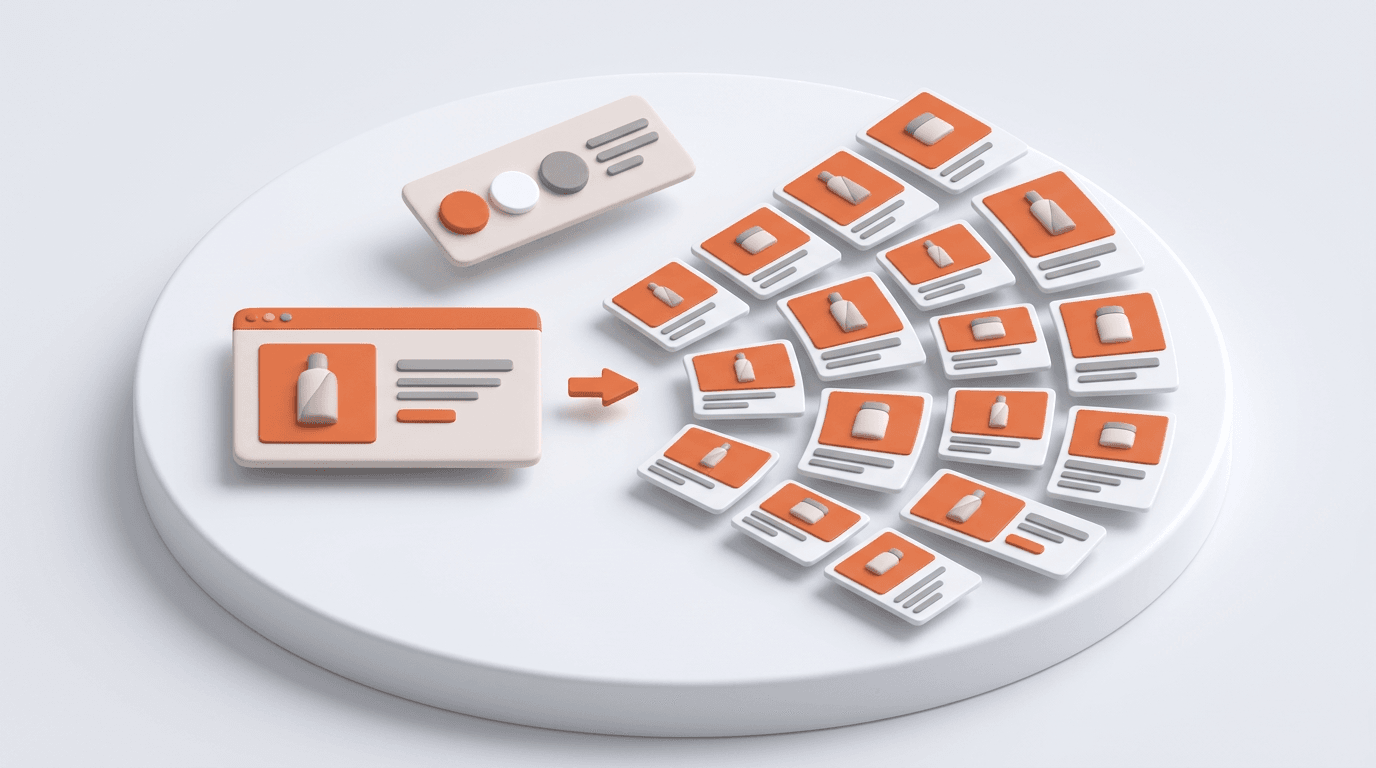
The post made one claim that needs a system behind it: one product page in, forty finished on-brand statics out, same day. This is that system. It has four parts, and the post named all four:
- The Brand DNA prompt — Astra reads the product page and writes the brand down properly
- The 40 formats — the static ad archetypes that actually get tested and scaled
- The spec sheet — the document that turns a format plus a brand into something a model can render
- The render instructions — how Image-2.5 executes a spec without reinventing your product
I'll be straight about one thing up front. The Brand DNA step is the manual version of what HeyOz does the moment you paste a URL. Doing it by hand once is worth it — you'll understand exactly what "on brand" means in concrete terms, and you'll be able to judge whether any tool is doing it well. But after the first time, it's a step you'll want automated. I'll show you both.
You need: ChatGPT with GPT-6 Astra selected, GPT-Image-2.5 (in ChatGPT, or
gpt-image-2.5-sunburst Astra reads the product page two ways. Paste the URL and it'll fetch and read the page. Or, if you have Computer Use enabled,
@Chrome One session per brand. Don't mix brands in a chat. The DNA doc is the context for everything after it, and two brands in one window bleed into each other.
The output of this prompt is a document. Save it. It's the input to every static you make for this brand from now on.
What good output looks like: two pages, mostly observed rather than inferred, with hex codes, a typeface guess you can verify, and three "never says" lines that make you nod. If section 10 is generic — "never uses clickbait" — push back: "Be specific to this brand. What would sound wrong coming from them?"
The automated version. Everything in sections 1–4 — colour, typography, packaging, photography — is what HeyOz extracts from the URL automatically and holds constant across every creative it renders. Sections 5–10 are the strategic half, and that's where Astra earns its place. The practical split, once you've done this by hand once: let the platform hold the visual DNA, and use Astra for tone, vocabulary, claims and the buyer.
Short stage, and it's the one that separates on-brand from on-category.
Five angles. Each will get eight formats. That's the forty.
These are the static formats that recur across scaled ad accounts. Not every one fits every brand — an ingredient breakdown makes no sense for a sneaker — so you'll pick from the list, not run all of it.
Each entry: what it is, when to use it, what the spec needs.
Product-led (1–8)
1. Hero packshot — product centred, clean background, one headline. Use for launch, retargeting. Needs: product at 40–60% of frame.
2. Plinth — product on a coloured block or pedestal, hard shadow. Use when the packaging is the story. Needs: plinth colour from DNA secondary palette.
3. Flat lay — product with 3–5 related objects, top-down. Use for lifestyle context without a person. Needs: prop list from DNA section 4.
4. Detail macro — extreme close-up of one packaging detail. Use to signal quality. Needs: the recognisable detail from DNA section 3.
5. In hand — product held toward camera. Use for scale and relatability. Needs: hand only, no face, background from DNA.
6. In use — product mid-application, mid-pour, mid-wear. Use when the mechanism is visual. Needs: the action described in one line.
7. Multi-angle — three views of the product in one frame. Use for physical goods where shape matters. Needs: which three angles.
8. Scale reference — product beside a familiar object. Use when size is a question. Needs: the object.
Claim-led (9–16)
9. Type-only — headline is the whole ad, product small or absent. Use for a claim strong enough to stand alone. Needs: headline under 6 words, DNA headline typeface.
10. Stat callout — one giant number, one line beneath. Use when a number does the persuading. Needs: the number from DNA section 7.
11. Feature checklist — 3–5 checkmarked lines beside the product. Use for comparison shoppers. Needs: features in DNA vocabulary.
12. Ingredient breakdown — product with 3–4 labelled components. Use for consumables, skincare, supplements. Needs: the components and one word each.
13. Built from N things — the ingredient breakdown as a headline. Use when simplicity is the pitch. Needs: N and the list.
14. Benefit trio — three icons, three labels, product beneath. Use for broad awareness. Needs: three benefits, each two words.
15. Single benefit — one benefit, one image proving it. Use when one thing matters most. Needs: the benefit and the visual proof.
16. Mechanism — three-step "how it works." Use for products that need explaining. Needs: the three steps, four words each.
Proof-led (17–24)
17. Testimonial card — one quote, name or initial, product small. Use for consideration stage. Needs: a real quote from reviews.
18. Review highlight — star rating, review count, one line. Use when the numbers are strong. Needs: DNA section 8.
19. Review wall — four to six short quotes tiled. Use for volume of proof. Needs: six quotes under ten words.
20. UGC-style — phone-quality photo with a quote overlaid. Use to look native in feed. Needs: "phone-shot" in the spec, casual framing.
21. Press bar — "as seen in" with logos or names. Use when press exists. Needs: names in DNA typeface, no logo reproduction.
22. Founder or expert — a quote attributed to a credible voice. Use when authority moves the buyer. Needs: the quote and the credential.
23. Numbers proof — "10,000 sold" / "4 million served." Use when scale is proof. Needs: the number, verified.
24. Before / after — two states, one frame, clear divider. Use when the change is visible. Needs: honest, same lighting both sides.
Comparison (25–28)
25. Us vs them — two-column table, ticks and crosses. Use for switchers. Needs: 4–5 rows, no competitor named.
26. Old way vs new way — the problem on the left, the product on the right. Use for category-creation. Needs: the old way in one line.
27. Cost comparison — price per use, per day, per serving. Use when price is the objection. Needs: the maths, checked.
28. Swap this for that — a familiar thing crossed out, product beside it. Use for habit replacement. Needs: the thing being replaced.
Objection-led (29–32)
29. Myth vs fact — a common belief struck through, the correction beneath. Use for educated buyers. Needs: the myth from DNA section 9.
30. "But what about…" — the objection as the headline, the answer as the body. Use for the top objection. Needs: the objection verbatim.
31. Guarantee — the risk reversal as the whole ad. Use late-funnel. Needs: the exact guarantee terms.
32. FAQ card — one question, one answer, product small. Use for a specific hesitation. Needs: the real question from reviews or support.
Offer-led (33–36)
33. Offer hero — discount or deal dominant, product supporting. Use for promotions. Needs: the offer, the code, the end date.
34. Bundle — multiple products, one price. Use for AOV. Needs: what's in it and the saving.
35. Limited drop — scarcity or time as the headline. Use only when true. Needs: the real constraint.
36. Threshold — "free shipping over X." Use to lift basket size. Needs: the threshold.
Native (37–40)
37. Notes-app — text on a notes-app-style background. Use to stop the scroll by not looking like an ad. Needs: casual copy, DNA tone at its loosest.
38. Post card — looks like a social post: avatar, handle, short text. Use for opinion-led angles. Needs: the brand's handle, one punchy line.
39. Chat bubble — a two-message exchange. Use for objection handling in a native format. Needs: the question and the reply.
40. Annotated photo — product photo with handwritten-style arrows and notes. Use to explain features casually. Needs: 2–3 annotations, four words each.
Picking your forty
Five angles × eight formats. For each angle, pick eight formats from different families — at least one product-led, one claim-led, one proof-led, and one from comparison, objection, offer or native. Don't run eight hero packshots.
One per static. Astra fills it; Image-2.5 executes it. Every field is concrete on purpose — "heavy headline, bottom-left, product at 45%" renders reliably, "bold and clean" does not.
What Image-2.5 is and isn't
It renders one image from one prompt, and this week's release made it genuinely reliable at two things that matter here: preserving a product from a reference photo, and holding edits stable across multiple turns. That's why a spec sheet can be executed faithfully now.
What it isn't: aware of your brand between sessions, aware of your catalogue, or aware that render 27 needs to match render 3. Every image is a fresh prompt. For a handful of statics that's fine. For forty, brand-locked, with the product identical in every one, it's an afternoon of pasting and checking — and by render twenty the product has usually drifted.
That's the volume layer HeyOz provides. Product URL in — the visual DNA is extracted automatically, which is the same thing you did by hand in Part 2 sections 1–4. Upload the reference photos once. Paste each spec sheet. It runs the forty against your brand with the product held constant, across Image-2.5 and every other image model side by side, so you can see which one executes your specs best. Five brands means five brand profiles, each holding its own DNA — the stress test in the post ran this way, not one chat window per brand.
Both paths below.
6a — Manual, one spec at a time
Select GPT-Image-2.5. Attach the reference photo. Then:
For variations, edit — don't regenerate:
Version six should still match version one. If it doesn't, you're on Flare — switch to Sunburst.
6b — At volume
- Product URL in. Confirm the extracted colours and typeface match DNA sections 1–2.
- Upload the reference photos.
- Paste spec sheets. Set format and aspect ratio per sheet.
- Generate the headline and background variants from each sheet.
- Compare model outputs on the same spec. Pick per format — the model that nails a macro isn't always the one that nails a type-only.
Forty statics, product identical across all of them, in the time it takes to do six by hand.
The QA pass
The test
- ABO, one ad set per angle, same audience
- 12–16 statics from the QA pass — the top formats across all five angles
- Judge on CTR and thumbstop first; conversions come later
- Three days and a spend floor before touching anything
- Fix the winning angle, then vary formats within it next round
The format that wins tells you how your buyer likes to be persuaded — proof, comparison, claim. That's the insight. The angle tells you what they needed to hear.
The DNA doc is mostly [inferred]. Astra couldn't see the page rendered. Use Computer Use so it looks at the actual typography, or paste screenshots of the page.
Copy sounds like the category, not the brand. Sections 5, 6 and 10 are thin. Feed Astra three more pages of the brand's own writing — blog, emails, packaging copy — and regenerate those sections.
Image-2.5 changes the product. Reference photo not attached, or the prompt says "a bottle like this" instead of "this bottle, exactly."
Text renders wrong. Quote it in the prompt. Unquoted headlines get paraphrased.
Forty renders, product drifted by twenty. You're running the matrix by hand. 6b exists for this.
Everything passes QA, nothing performs. The angle map targeted a belief the buyer doesn't hold. Back to Part 3, section 1 — what do they actually believe before they find you?
The three-day wait, the revision rounds, the batch of five. The part of the designer's month that was logistics, not craft.
What it doesn't replace: deciding which of the five angles to run first, reading what the winning format says about your customer, and knowing when a brand's DNA needs to change rather than be executed. That's the work that was always worth the money.
Astra writes the brand down and thinks in its voice. Image-2.5 renders one static faithfully. HeyOz holds the brand and runs the forty. One product page in, forty out, same day — and next month's forty start from this month's spec sheets.
Reply with section 10 of your DNA doc — the three things the brand never says. It's the most revealing part and I want to see how it varies by category.
About the author
Ahad Shams
Ahad Shams is the Founder of HeyOz, an all-in-one ads and content platform built for founders and small teams. He has worked across consumer goods and technology, with experience spanning Fortune 100 companies such as Reckitt Benckiser and Apple. Ahad is a third-time founder; his previous ventures include a WebXR game engine and Moemate, a consumer AI startup that scaled to over 6 million users. HeyOz was born from firsthand experience scaling consumer products and the need for a unified, execution-focused marketing platform.